Wind Turbine
Wind Turbines are devices that use the wind’s power to generate electricity. Wind turbines convert the kinetic energy of the wind into electrical energy. The turbine’s rotor consists of blades, which, when exposed to wind, drive the generator to produce electrical energy.
Wind turbines convert wind energy into electricity by using the aerodynamic force of the rotor blades, which function similarly to an airplane wing or helicopter rotor blade. When the wind flows across the blade, the air pressure on one side drops. The difference in air pressure across the blade’s two sides creates lift and drag. The lift force is greater than the drag force, causing the rotor to spin. The rotor is connected to the generator either directly (if it is a direct drive turbine) or via a shaft and a series of gears (a gearbox). This conversion of aerodynamic force to generator rotation generates electricity.
Generally, there are two types of wind turbines categorized as:
- Horizontal Axis Wind Turbine (HAWT)
- Vertical Axis Wind Turbine (VAWT)
Horizontal Axis Wind Turbine (HAWT)
In these types of wind turbines, the axis of rotation is horizontal, and the aero turbine plane is vertically facing the wind. A common type of wind turbine with a horizontal axis is shown in the figure.
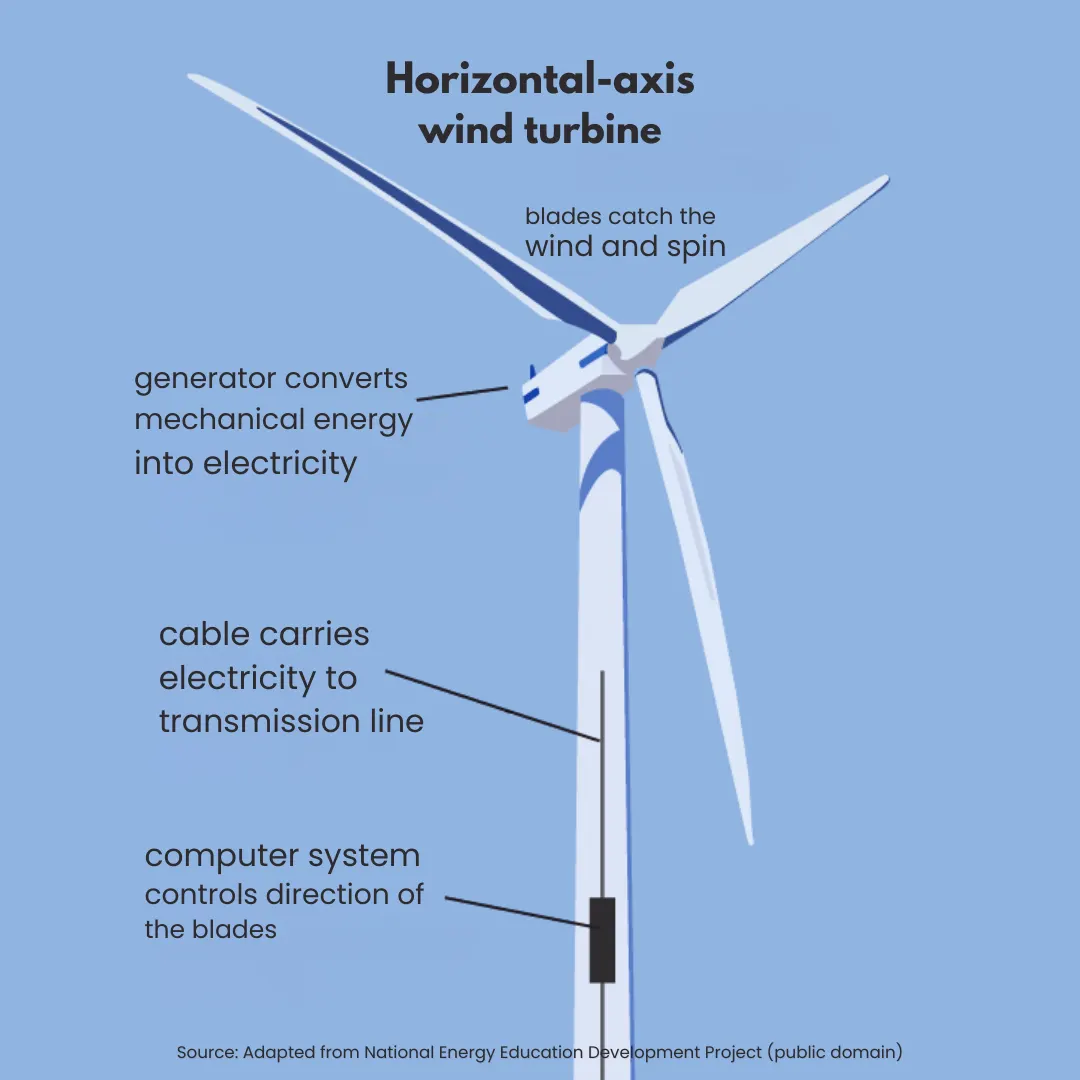
The different types of rotors used in horizontal axis wind turbines are multi-blade, sail, propeller, and four blades.
Vertical Axis Wind Turbine (VAWT)
In this type of wind turbine, the axis of rotation is vertical. It is also possible for the sails or blades to be vertical. The primary rotor shaft of a vertical-axis wind turbine is oriented transversely to the wind, though not always vertically. The main parts of the turbine are housed at the base. This arrangement allows the generator and gearbox to be located close to the ground. The widely popular different rotor types used in vertical axis wind turbines are Savonius and Darrieus type of rotor.
A type of wind turbine with a horizontal axis is shown in the figure below.
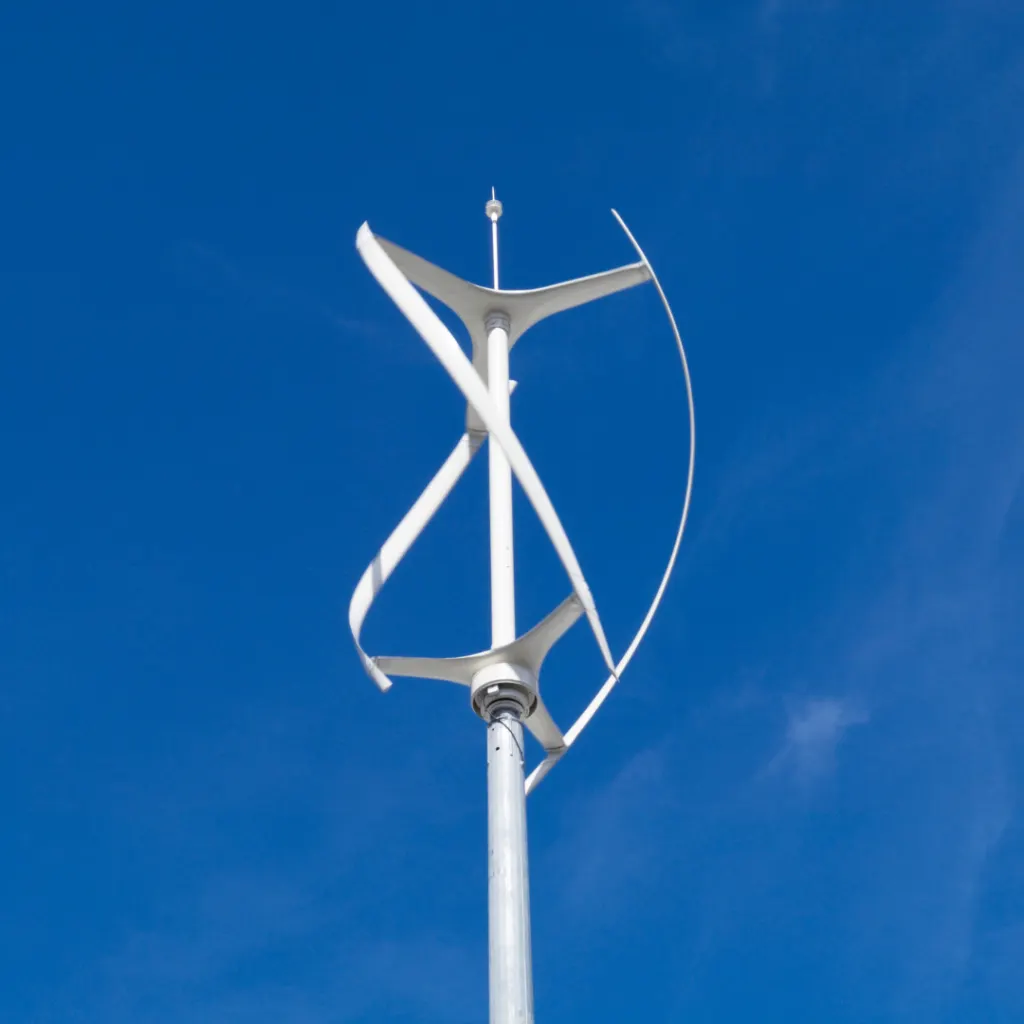
Darrieus Wind Turbine
Harmony Wind Turbine (HWT)
The Harmony wind turbine is a modified version of the Savonius wind turbine, developed by engineer and entrepreneur Christopher Moore. It consists of multiple components, including blades, gears, shafts, bearings, bucket holders, frames, and a gearbox. The turbine’s design features a vertically aligned layer of blades. In its closed state, the turbine takes the form of a cylindrical drum.
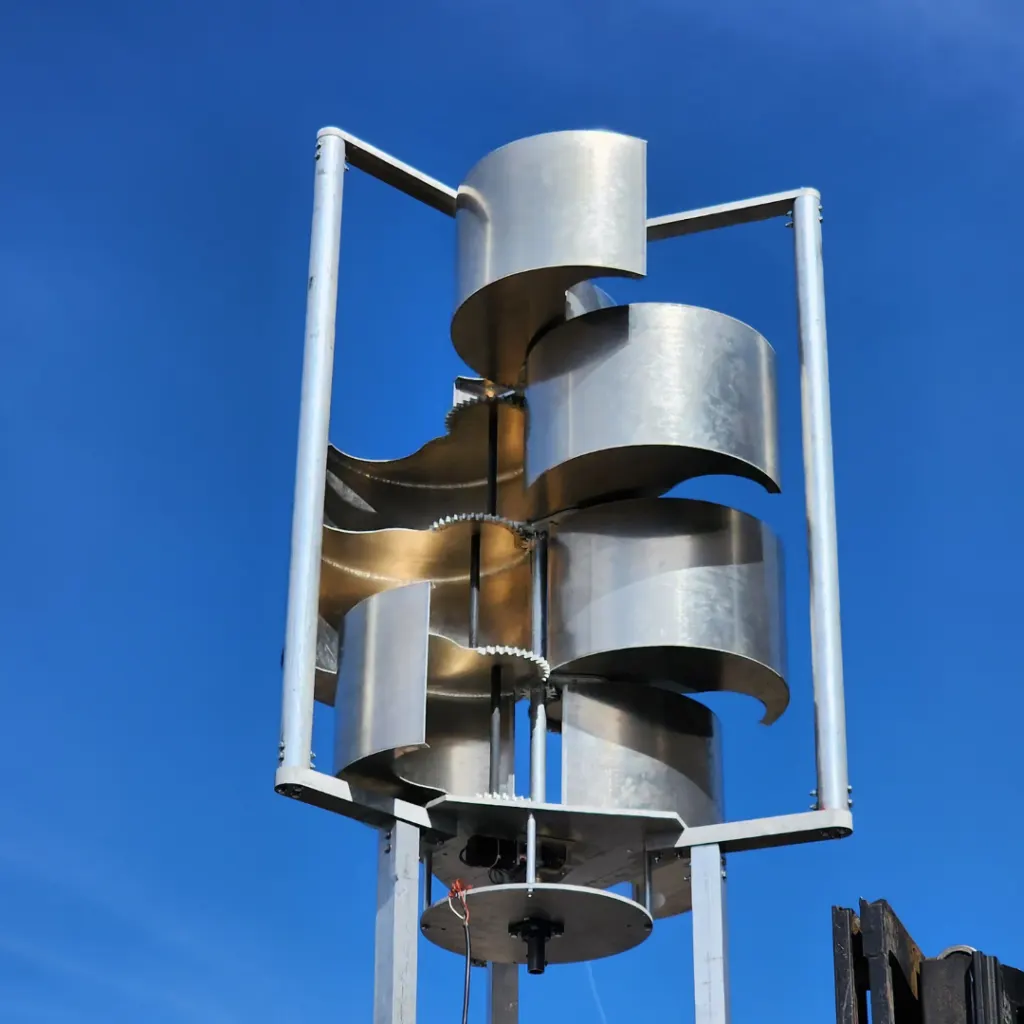
Image Source: Harmony Turbines
The Harmony wind turbine, like other Savonius wind turbines, features a drag-based configuration with two buckets per layer. The angle between subsequent layers can be arranged at a 60-degree orientation, resembling a helix shape (DNA). The furling mechanism of the Harmony wind turbine distinguishes it from other Savonius wind turbines.
The Harmony Wind Turbine is designed as a drag-based Savonius wind turbine, capable of functioning independently of air direction and particularly effective in low wind speed conditions. Notably, it exhibits a commendable starting torque at lower wind speeds.
Video Source: Christopher Moore YouTube Channel
How the Furling Mechanism Works
The turbine operates using a furling mechanism to protect the turbine body during high wind speed conditions. This mechanism facilitates the adjustment of blade orientation away from the wind direction when needed. In essence, wind flow prompts the rotation of the blades, capturing their kinetic energy. These rotating blades are connected to a drive shaft, which turns an electric generator, producing electricity.
In normal wind conditions, the Harmony wind turbine freely rotates with fully open blades, maximizing the exposed area to the wind for efficient energy generation. However, during high wind speeds, the blades furl or fold back to decrease the swept area and lower rotational velocity. This furling action involves a gear mechanism connecting the driver gear on the blade to the driven gear on the shaft.
As wind speed increases, the turbine’s blade gears engage with the vertical shaft, progressively closing to reduce blade rotation speed and protect the system. There is a vertical aperture or cut in the blade’s gearing edge that allows air to pass from the main scoop of the bucket to the outside environment. When the bucket is closed, the airflow through the aperture turns the turbine. The wind speed at which the blades furl and open is determined by the size and weight of the blades.
CAD Models
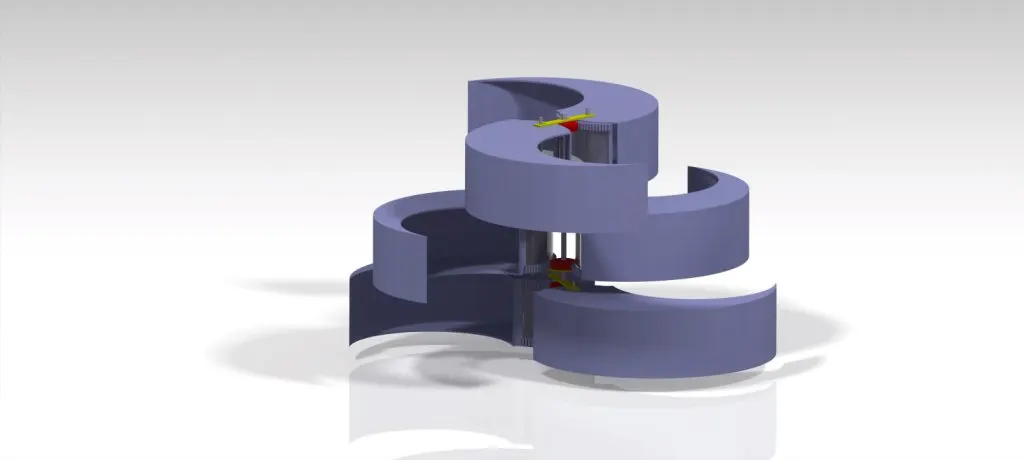
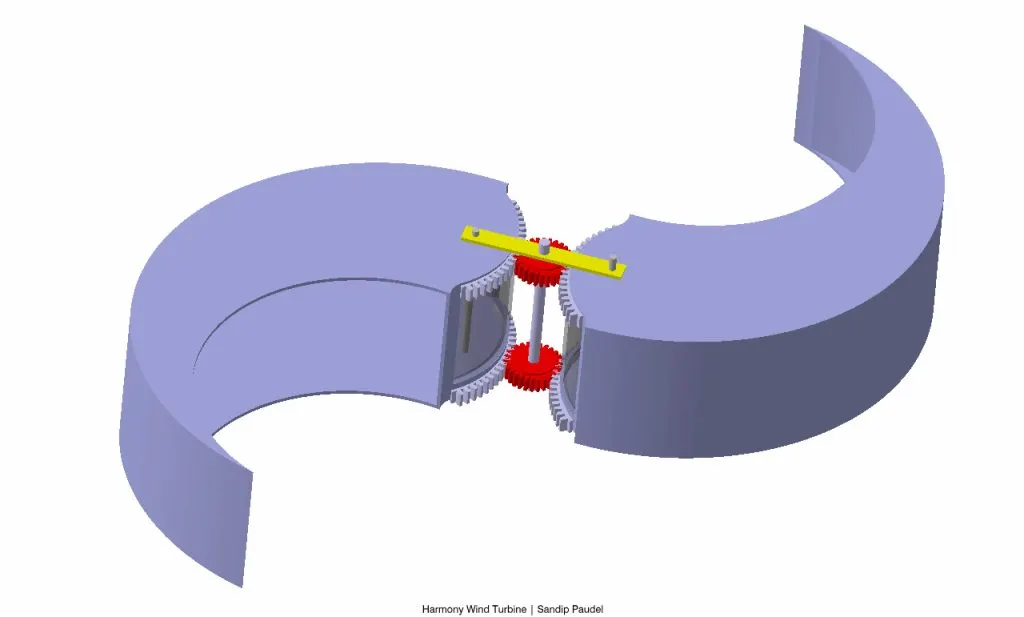
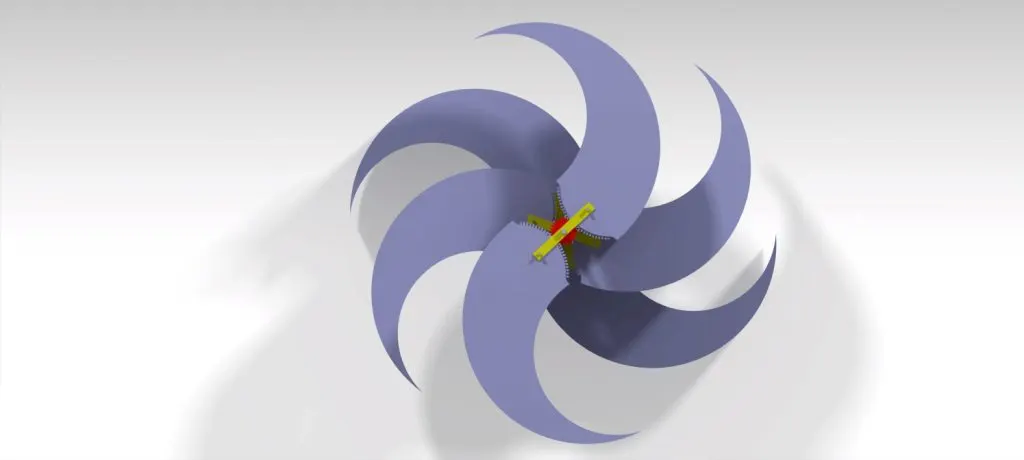
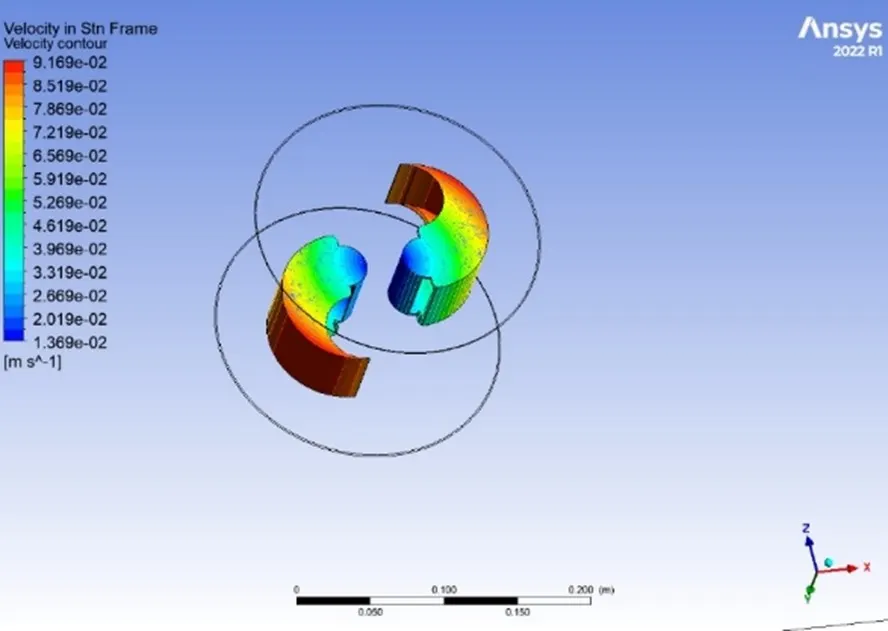
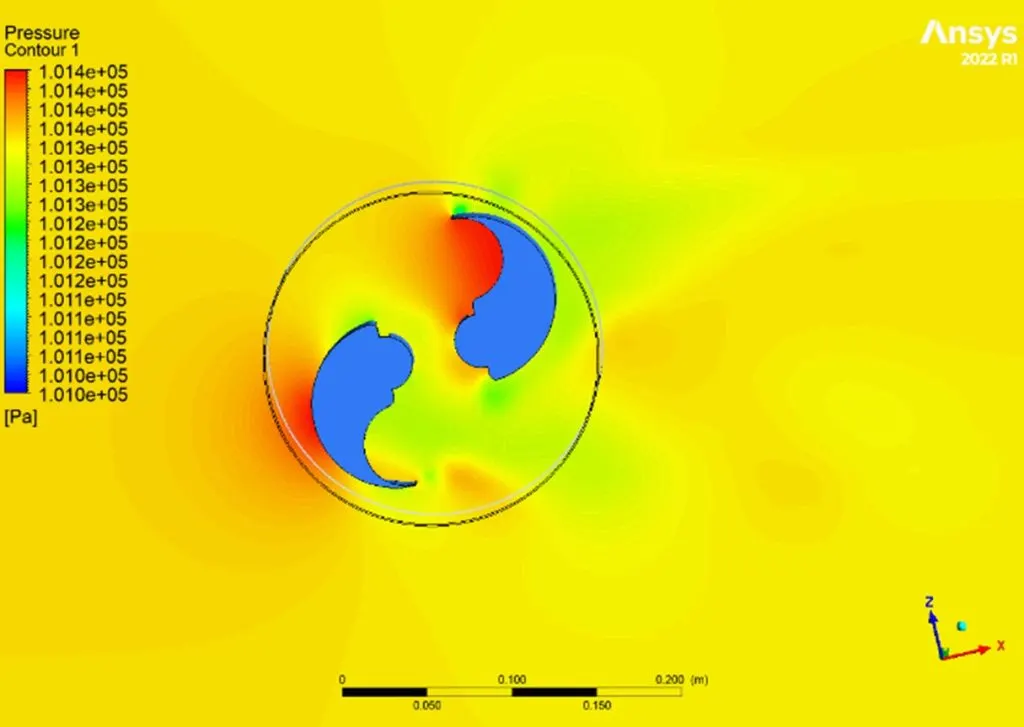
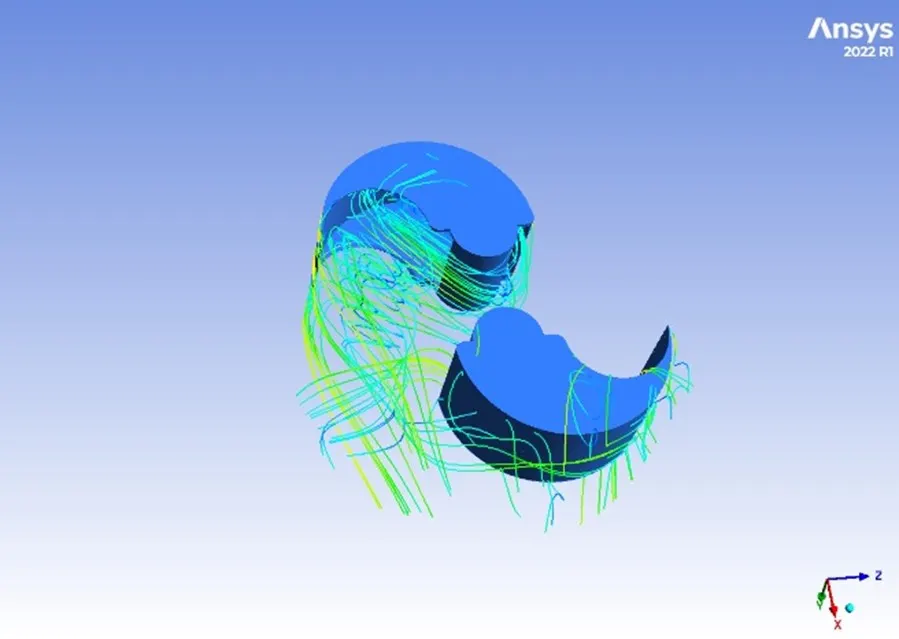
These models and the CFD results below follow the same modelling and simulation workflow used in CAD design and CFD simulation project work — a 3D model first, then flow analysis to check how it actually performs.
CFD Simulation Results
Frequently asked
What’s the difference between a horizontal-axis and vertical-axis wind turbine? A HAWT rotates around a horizontal axis with the rotor plane facing the wind directly — the common propeller-style turbine. A VAWT rotates around a vertical axis, with the generator and gearbox housed at the base rather than up in the rotor, using rotor types like Savonius or Darrieus.
What makes the Harmony Wind Turbine different from other Savonius turbines? Its furling mechanism. As wind speed increases, a gear mechanism progressively closes the blades to reduce swept area and rotational speed, protecting the turbine — a feature that distinguishes it from other Savonius-type designs.