Registered Mechanical Engineer
Nepal Engineering Council
Professional registration authorising independent mechanical engineering practice in Nepal.
License No. 12056
I work at the intersection of engineering assessment, financial modelling and energy policy, and I teach what I learn along the way.
I assess renewable energy projects technically and financially, publish energy policy research with the Nepal Policy Forum, and teach technical training courses for engineering students in Nepal.

Nepal Engineering Council registered mechanical engineer, working across renewable energy, technical due diligence and energy policy in Nepal, Bhutan and Bangladesh.
My training is mechanical engineering: fluid dynamics, turbomachinery and CFD. My work sits where that engineering meets money and policy. I check whether renewable energy projects hold up technically, financially and in the regulatory environment around them.
Since 2025 I have worked at Quasar Energy Consultants in Lalitpur, running solar PV feasibility studies, technical due diligence and techno-economic modelling for investors and developers across Nepal, Bhutan and Bangladesh.
Alongside that, I have worked as an Energy Policy Fellow at the Nepal Policy Forum, publishing research on electricity tariffs and power trading governance, and I design and teach short courses on battery storage and solar PV design for engineering students.
Site and desk-based technical assessment — shading, structural capacity, generation history, whatever the specific project needs checked.
PVsyst yield modelling or techno-economic analysis, linking the engineering to payback, tariff exposure and risk.
Independent technical due diligence and compliance checks where the work is for a lender or investor, not just a developer.
A clear, defensible recommendation — not a report that just states the obvious.
Kathmandu University
Quasar Energy Consultants, Lalitpur
Quasar Energy Consultants, Lalitpur
Kaligandaki 'A' Hydropower Plant
Association of Mechanical Engineering Students, Kathmandu University
Nepal Policy Forum
Khwopa College of Engineering
Skill Lab Asia
Six areas where I take on project work, each with real proof and its own page on how I approach it.
Site assessment and PVsyst yield modelling for a 26-site, 6.76 MWp DC commercial rooftop programme, plus feasibility studies for solar lift irrigation across six pilot sites in Nepal, Bhutan and Bangladesh.
Read moreIndependent engineering review of ten operating rooftop sites and a 5 MW utility-scale plant, for banks and impact investors.
Read morePublic-private-community partnership structures for "Water as a Service" delivery, alongside tariff and scenario modelling — including a policy brief forecasting NEA wholesale electricity prices.
Read more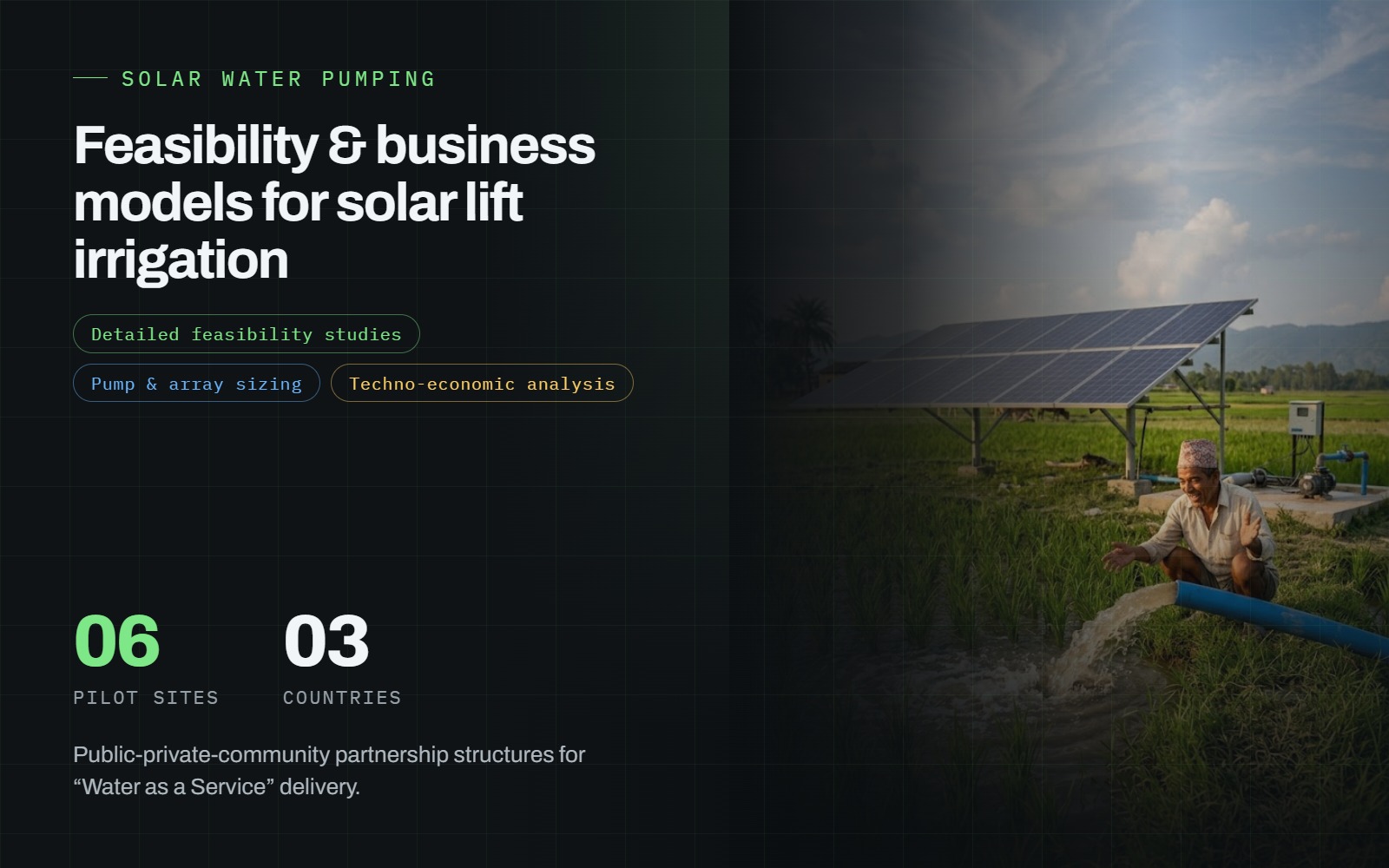
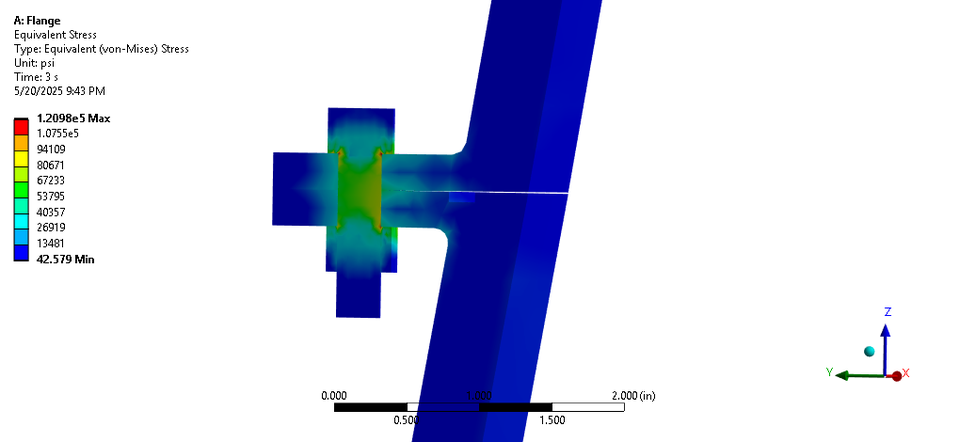
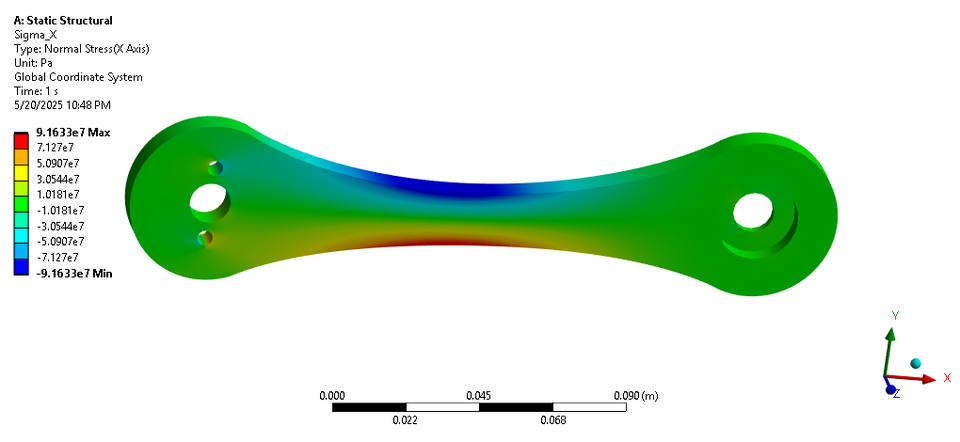
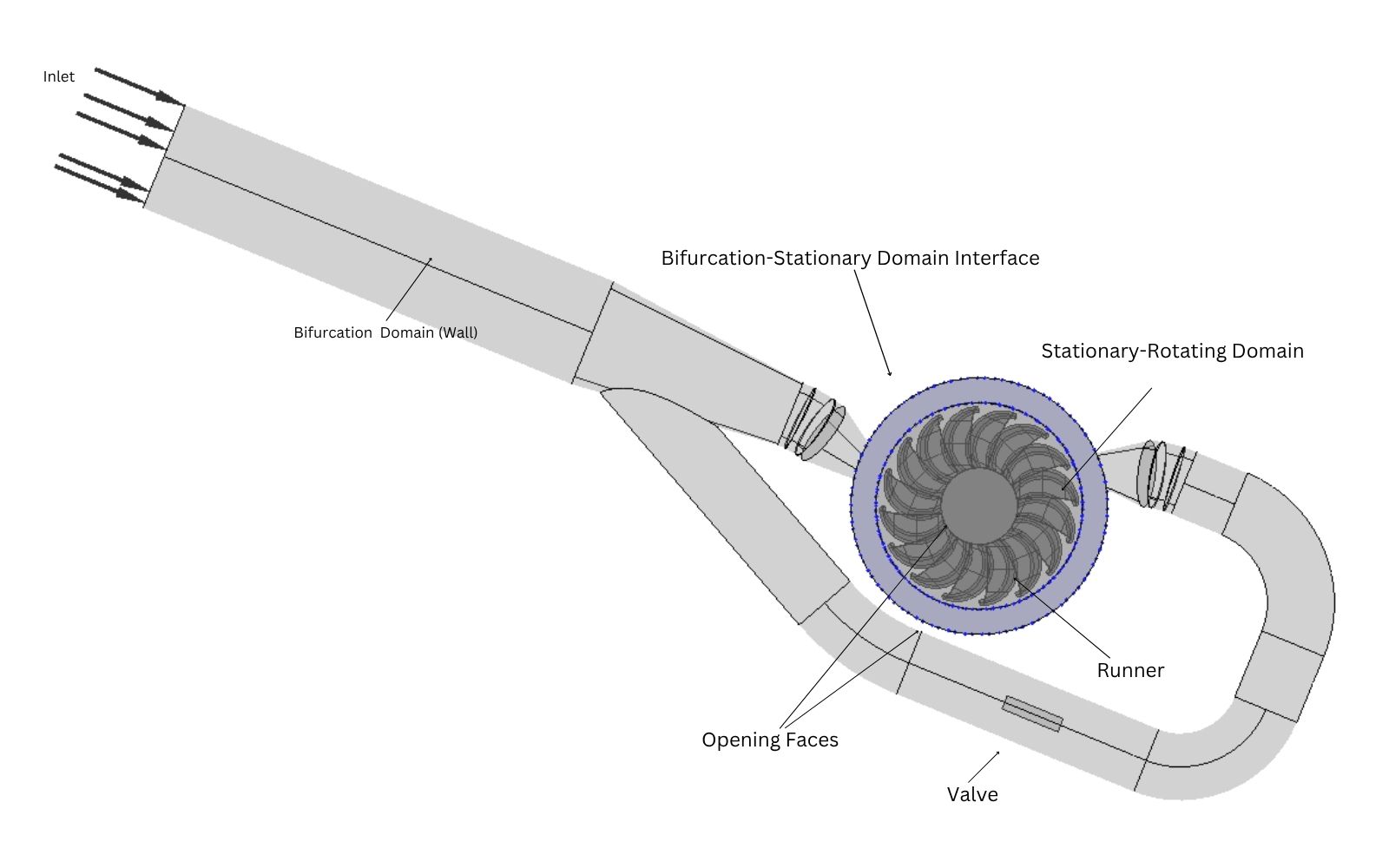
Turbomachinery jet interaction, vertical-axis wind turbine aerodynamics, and structural stress analysis, in ANSYS CFX. The Turgo turbine work behind this was my final year thesis — full abstract below.
Read more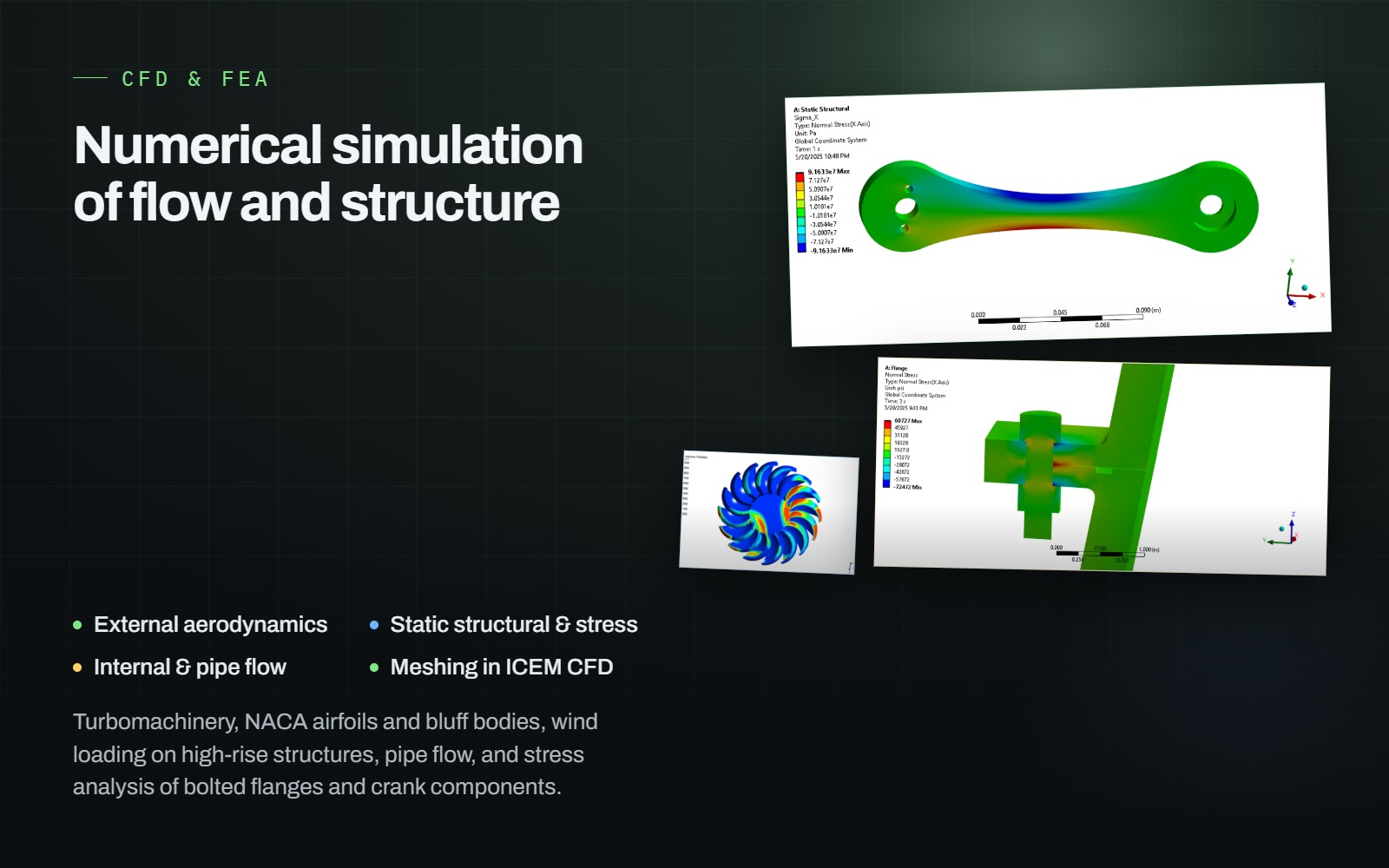
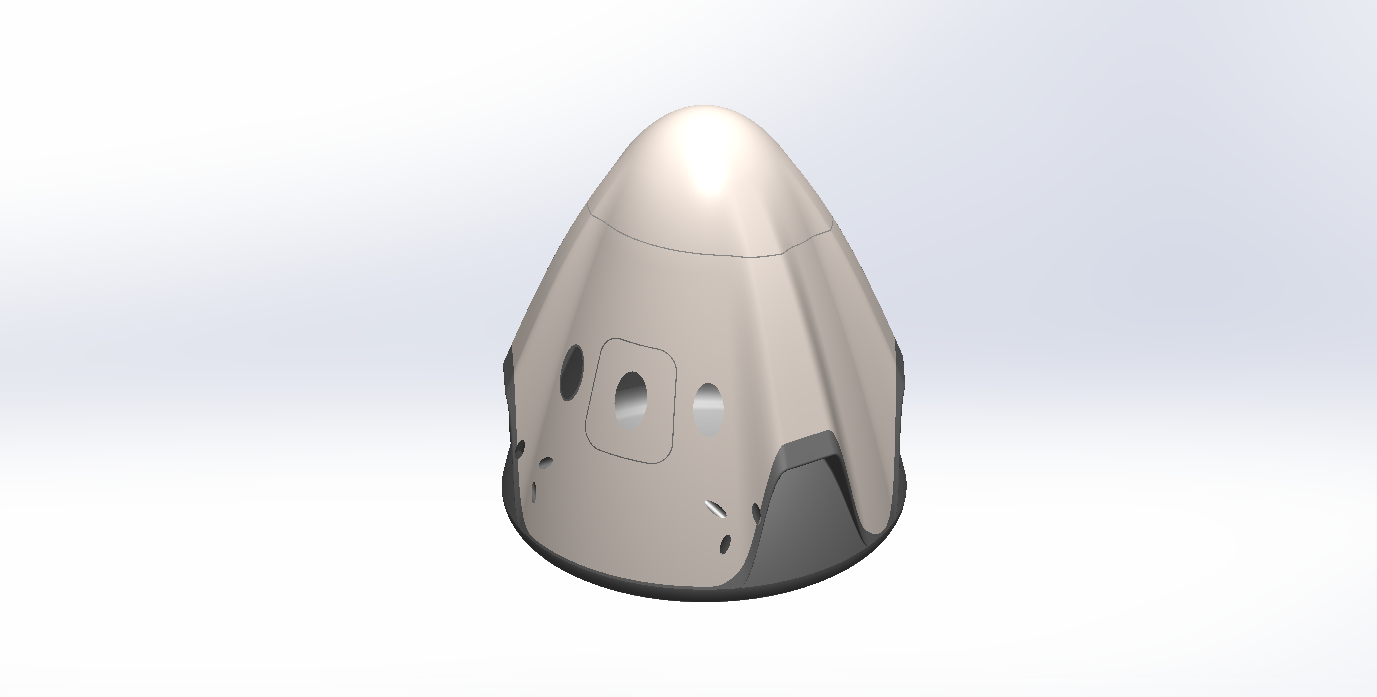
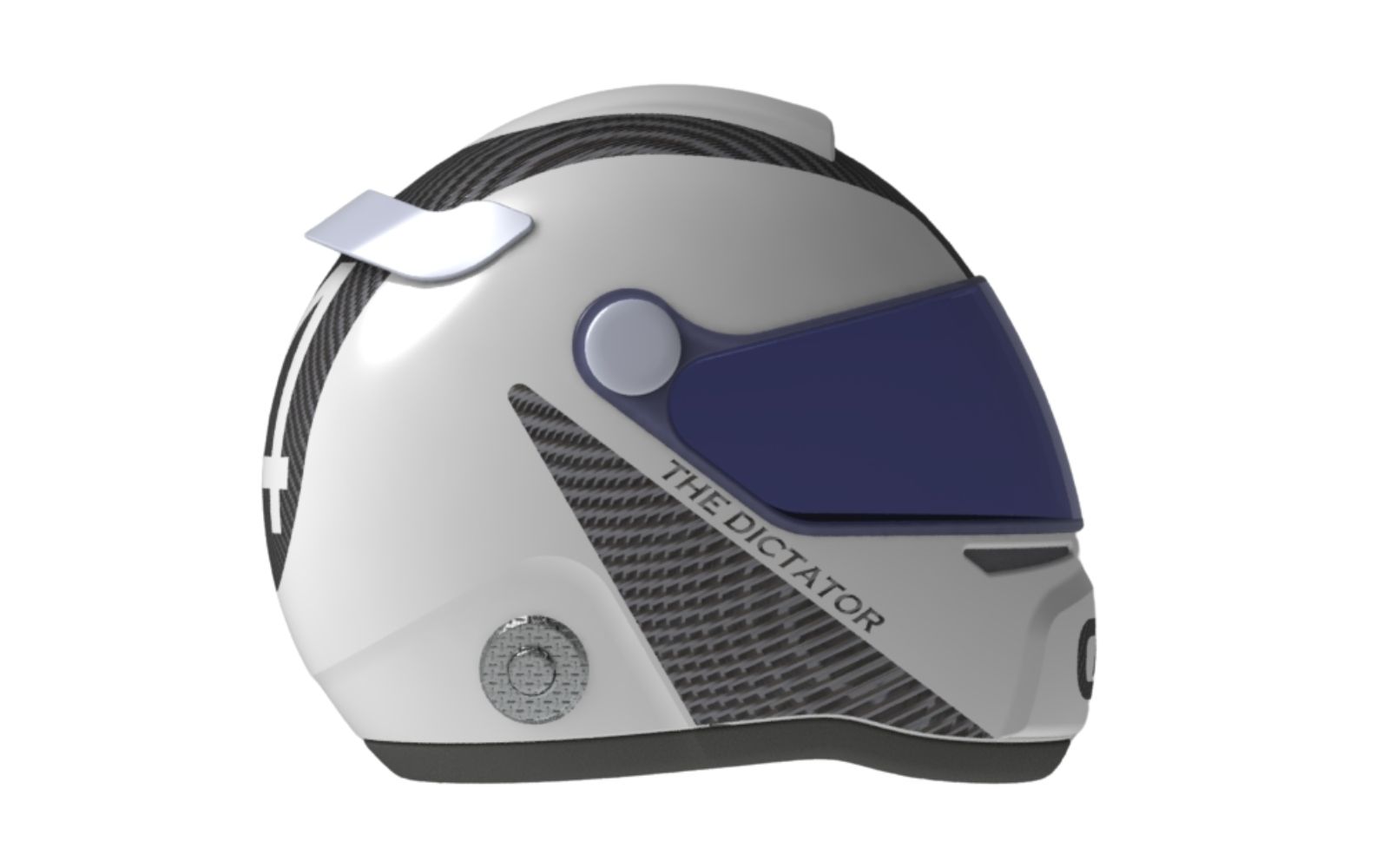
From EV charging station layouts to consumer products, mechanical components and aerodynamic surfaces. The full set, 35 models, is on GrabCAD.
Read more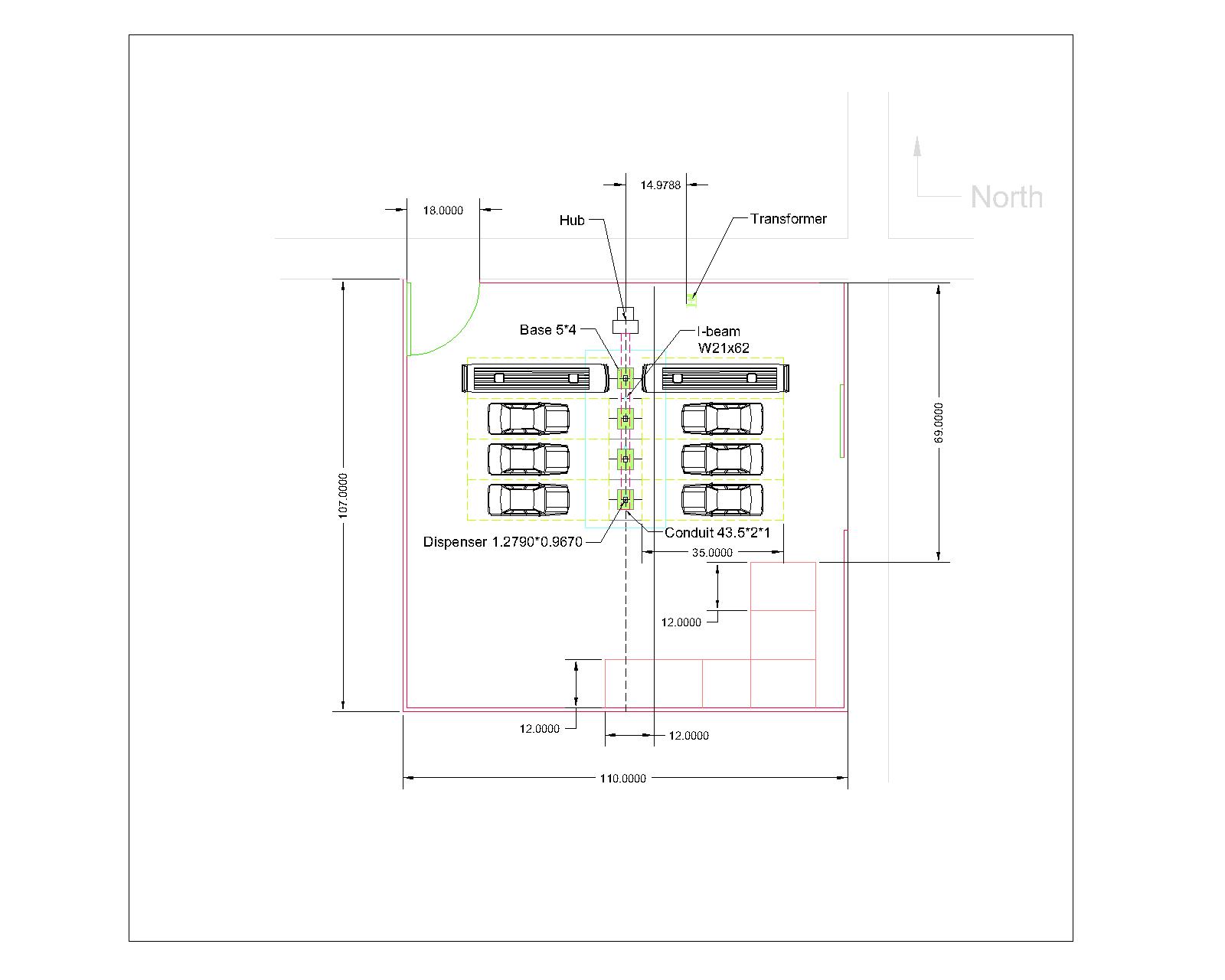
Feasibility, due diligence, modelling and design brought together for a project end to end, for solar PV and storage work across Nepal, Bhutan and Bangladesh.
Read more
Part and assembly modelling, CSWA certified
2D layouts, single line and civil drawings

Turbomachinery CFD, thesis and coursework

Solar yield simulation and loss analysis
Techno-economic and scenario models

Surface modelling coursework
Abstract
Hydropower is an important source of sustainable energy, and among various turbines, the Turgo turbine stands out due to its efficiency under medium-head conditions and its compact design. However, there is limited research on the double jet phenomena in Turgo turbines, particularly regarding the performance dynamics when two jets interact. This study aims to address this gap through a thorough numerical investigation using ANSYS CFX. The focus is on discharge patterns, jet angles, and turbine efficiency. By developing a detailed numerical model and comparing simulation results with experimental data from the Turbine Testing Lab (TTL) at Kathmandu University, the research seeks to improve understanding of flow processes in dual jet Turgo turbines. The findings indicate significant inefficiencies due to suboptimal nozzle setup and excessive bucket numbers. This suggests that adjusting the nozzle angle and optimizing the bucket design could substantially enhance turbine performance. The insights from this study pave the way for further research and development in optimizing Turgo turbine designs for improved efficiency.
Explainers I design to make energy sector topics readable for non-technical audiences.
Registration, certifications and short courses, most recent first.
Nepal Engineering Council
Professional registration authorising independent mechanical engineering practice in Nepal.
License No. 12056
Khwopa College of Engineering
Recognition for assisting delivery of a 12-hour applied battery energy storage systems course.
University of Newcastle
A course covering the fundamentals of emerging energy storage technologies and their role in the energy transition.
Udemy
A course covering the core principles and workflow of computational fluid dynamics simulation.
atingi.org
A course covering the fundamentals of climate change science and how carbon markets work.
Cornell University via edX
A course introducing engineering simulation methods and their practical application.
APA Group via Forage
A virtual work experience programme on engineering challenges in the transition to new energy.
Forage
A virtual work experience programme introducing electric vehicle engineering fundamentals.
Quasar Energy Consultants
An internal course covering the essentials of implementing solar PV projects, from site assessment to commissioning.
SourceCAD
A course covering core AutoCAD drafting skills for 2D technical drawing.
Quasar Energy Consultants
An internal certification covering climate and energy sector fundamentals.
Dassault Systèmes
Industry-recognised certifications validating proficiency across part modelling, additive manufacturing, electrical design, sustainability analysis and rendering.
CSWA, Additive Manufacturing, Electrical Design, Sustainability, 3DSwymer
Kathmandu University
A workshop on using LaTeX for structured scientific and technical writing.
DIYguru
A crash course covering the fundamentals of electric vehicle systems and technology.
MathWorks
An interactive course covering the fundamentals of MATLAB programming.
The work sits between engineering and finance: solar PV feasibility studies, technical due diligence on operating assets, and techno-economic modelling that shows whether a project can pay for itself. I also publish energy policy research and teach technical training courses.
Yes. Project work has covered sites across Nepal, plus solar lift irrigation studies in Bhutan and Bangladesh under the ICIMOD-led HI-CAS project.
A feasibility study asks whether a project should be built: site assessment, yield modelling, financial projections. Technical due diligence reviews a project that already exists or is under construction, for a lender or investor deciding whether to fund or acquire it.
Most current project work is solar PV and battery storage, but the training is mechanical engineering with a CFD background, and past project work includes hydropower turbine analysis and solar lift irrigation systems.
Yes. Techno-economic modelling, tariff and scenario analysis, and linking engineering assumptions to cash flow and payback are core parts of the work, not a separate handoff.
Through the contact page. It has the fastest way to reach me and what to expect once you do.
Available for solar feasibility studies, due diligence, techno-economic modelling and CFD work.
Get in touch