Nepal ended load shedding a decade ago, and rooftop solar has grown steadily since. That looks like a contradiction and isn’t. Industrial and commercial buyers are not installing solar for backup; they’re installing it because daytime grid power costs more than solar does. This guide covers who that arithmetic works for, the three ways to own a system, how export is actually paid for, what these systems cost and produce, and the risks that sit in the roof and the paperwork rather than in the panels.
Where rooftop solar pays, and where it doesn’t
The whole case rests on one comparison. A commercial or industrial consumer pays somewhere around NPR 9 to 11 per unit for grid electricity. Exported solar is credited at NPR 5.94 per unit, a fixed wholesale rate. Every unit consumed behind the meter is worth roughly twice every unit exported.
That single fact drives every design decision below. Self-consumption is the product. Export is a consolation.
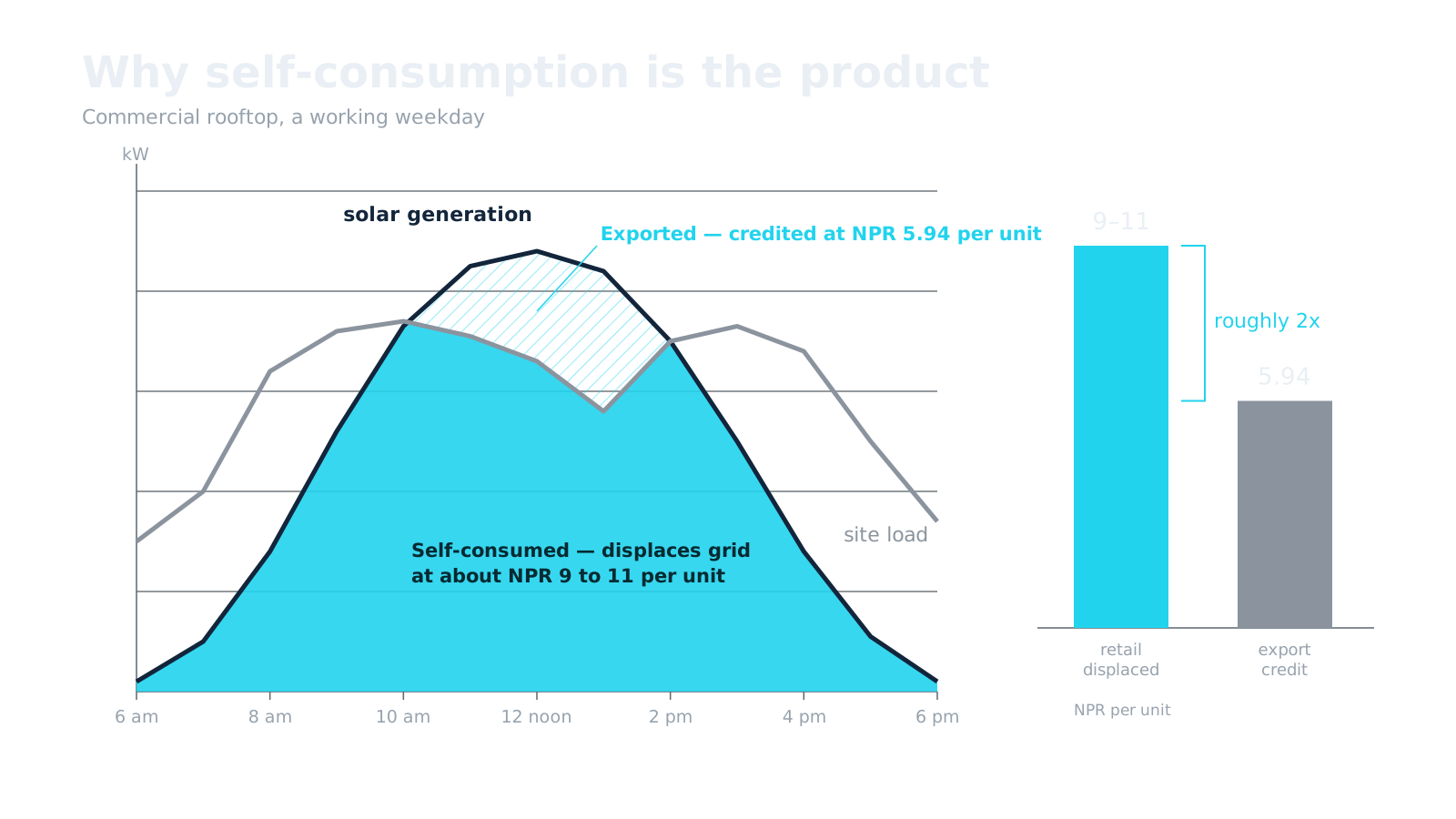
It also explains the shape of the market. A factory running two shifts, six days a week, consumes most of what it generates during the solar window and captures full retail value. A household is empty from nine to five, exports most of its generation at wholesale, and waits a long time for payback. Residential grid-tied solar in Nepal has been demonstrated repeatedly without taking off, and the reason isn’t awareness or panel prices. It’s that the export rate makes the numbers thin.
| Consumer type | Daytime load profile | Typical outcome |
|---|---|---|
| Manufacturing, cold storage, processing | High and flat through daylight | Strong. Most generation self-consumed |
| Hotels, hospitals, malls, schools | Moderate, with midday peaks | Workable, depends on the load curve |
| Offices | Moderate but weekday only | Marginal. Weekends export at wholesale |
| Households | Low during generation hours | Poor under current export rates |
If you take one thing from this page: establish your daytime consumption profile before you request a quotation.
Three ways to own it
| Captive (CAPEX) | RESCO / OPEX | EPC contract | |
|---|---|---|---|
| Who pays | The building owner | A third party developer | The building owner |
| Who owns the asset | Owner | Developer, for the PPA term | Owner |
| What the owner pays | Full capital cost, upfront or on debt | A per unit tariff, no capital outlay | Full capital cost |
| Who runs O&M | Owner, or a separate contract | Developer | Frequently nobody |
| Handover | n/a | End of PPA, typically 14 to 20 years | n/a |
| Best for | Owners with capital and a long horizon | Industry wanting savings without capex | Donor and government funded projects |
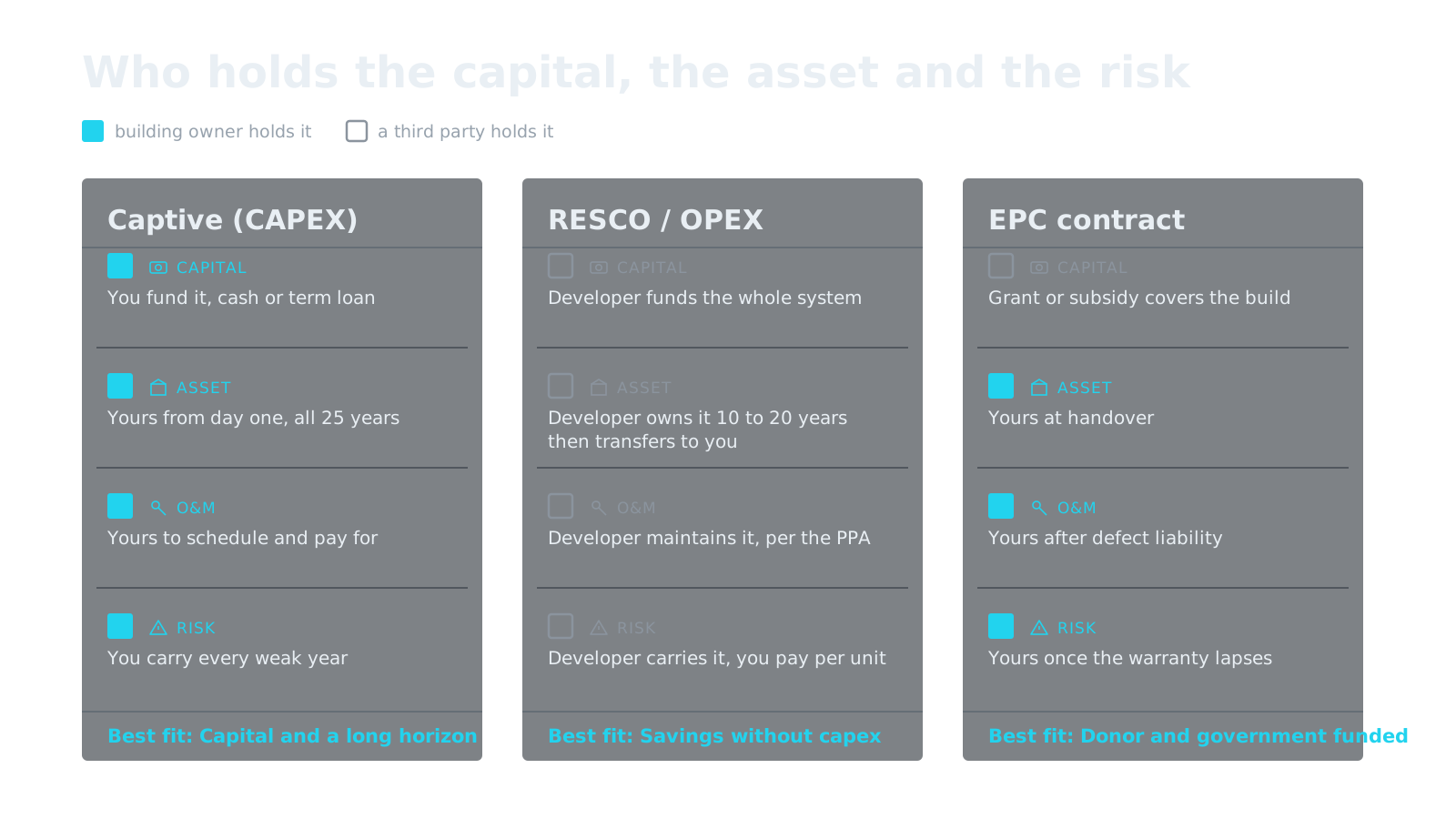
The RESCO model, sometimes called ESCO, has driven most commercial and industrial growth here. A developer builds and owns the plant on your roof and sells you electricity under a power purchase agreement at a tariff below the NEA rate. You pay nothing upfront and save from the first month. The developer carries the capital and the performance risk, which is why they care intensely about generation, and why you should read the operation and maintenance clauses rather than skipping to the tariff.
Tariff structures vary. Some are fixed for the whole term. Some are pegged to the NEA rate at a fixed discount. Some step up after a set number of years. A tariff pegged to the NEA rate protects the developer against tariff movements and protects you against nothing, so if you sign one, negotiate a floor and a ceiling.
The EPC route, where a contractor builds and hands over, dominates donor and government funded installations. It carries a well documented weakness: once the contractor has been paid, after-sales support frequently evaporates. Sector assessments published by GIZ have repeatedly identified post-installation support as an industry-wide gap. Contract O&M separately, or budget for the plant to degrade.
Net metering, net billing, and what actually happens
This is the most confused topic in Nepali solar, and the confusion is not the reader’s fault.
Nepal adopted a net metering policy in 2018, with a directive from the Ministry of Energy, Water Resources and Irrigation the same year. True net metering offsets exported units against imported units, one for one. In July 2022 the NEA stopped purchasing rooftop solar on that basis and moved to net billing, where export is credited at a fixed rate rather than offset against your retail tariff. After sustained pressure from the sector a purchase mechanism was restored, and NEA material still refers to net metering. What most systems actually receive is net billing at NPR 5.94 per unit — the same benchmark rate the NEA has used as its reverse-auction PPA ceiling for grid-scale solar.
The terminology in the market is therefore loose. When a supplier says “net metering”, ask two questions: at what rate is export credited, and does it offset units or rupees?
Other provisions worth knowing:
- Systems for commercial entities are capped at 1 MW under the Gross Metering Arrangement — a limit industry criticises since a large factory could usefully install several times that.
- Grid-connecting projects up to 1 MW require a generation permit from the Department of Electricity Development under the Solar Energy Development Procedure. Domestic systems under net metering are exempt.
- Solar is subject to a ceiling of around 10 per cent of the generation mix and currently sits near half of that.
- Renewable energy projects receive a 10 year income tax exemption from commercial operation, with 50 per cent for the following five years, and solar equipment carries VAT exemptions.
The approval that runs longer than the build
Here is the thing that damages more rooftop projects than any equipment fault, and it rarely comes up in a sales conversation.
Grid interconnection is a separate process from construction, and it runs on its own timetable. It involves a distribution centre with limited familiarity with solar, a bidirectional meter that has to be procured and installed, Renewable Energy Test Station certification, and a documentation chain that has to survive review. Industry surveys of Nepali solar companies have consistently ranked net metering procedures and RETS certification among the sector’s top barriers, above technical constraints.
Until that approval completes, everything the plant generates above the building’s instantaneous load is lost. Not exported, not credited, not recoverable later.
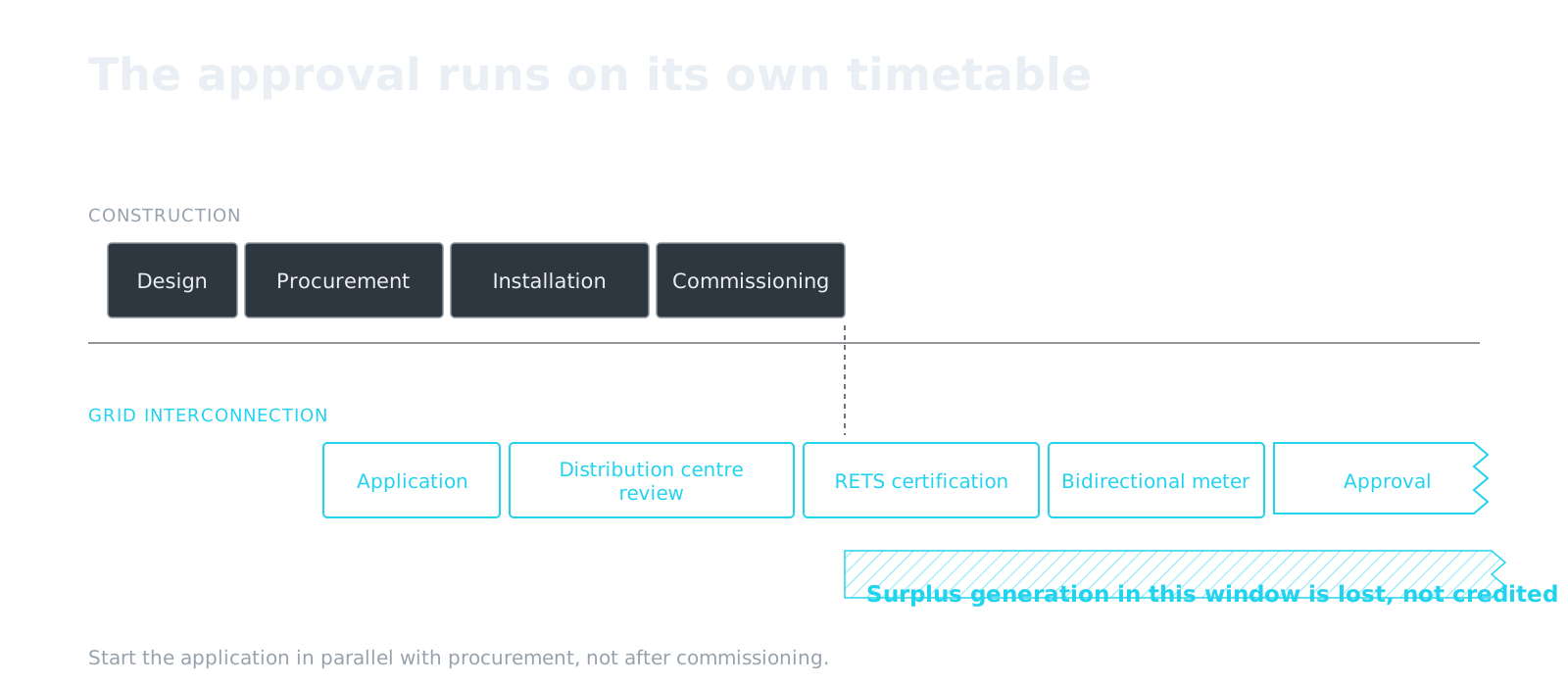
Plan for it accordingly:
- Model the lag explicitly. A financial model that assumes export revenue from the commissioning date is wrong, and the error falls entirely in year one where it hurts payback most.
- Start the application early, in parallel with procurement rather than after commissioning.
- Settle who carries the gap. Under a RESCO PPA, establish in writing whether the developer or the offtaker absorbs the lost generation before interconnection. Standard contracts tend to be silent, and silence favours whoever drafted them.
- Commission with the seasons in mind where you have the choice. A plant energised before the winter fog period, with approval already in hand, has a materially better first year than one energised into it.
Size against your load, not your roof
The instinct is to fill the available roof. The correct approach starts with twelve months of electricity bills.
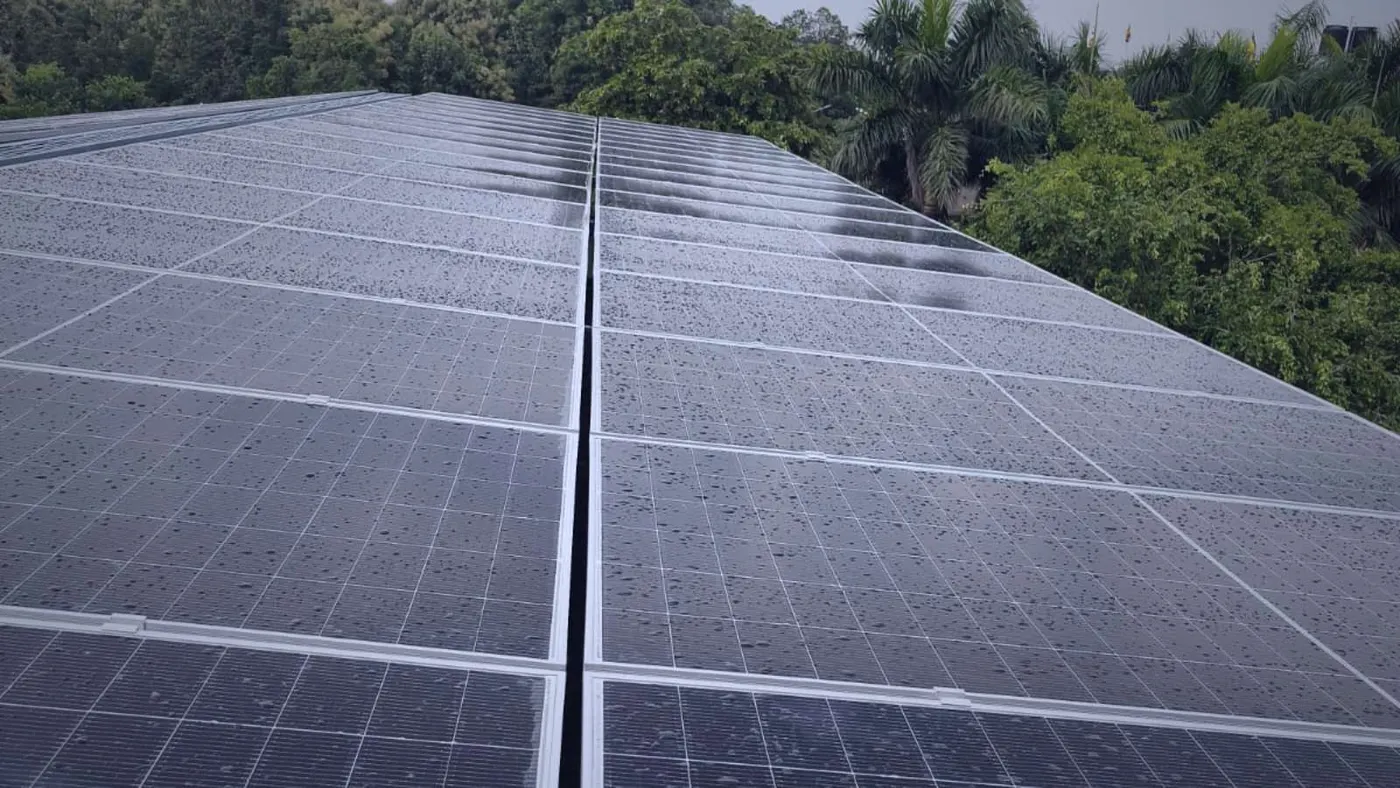
What matters is the split of consumption across the time of day blocks. Industrial and large commercial consumers in Nepal are billed on a time of day tariff, and the daytime block is what solar displaces. If daytime consumption is half your total, a system sized to cover all consumption spills half its output at the wholesale rate.
Work in this order:
- Daytime consumption in kWh per month, averaged across a year and checked for seasonality. Factory holidays, annual shutdowns and weekly closures matter more than people expect.
- Approved demand and recorded peak demand from the bill, which tell you what the connection carries.
- Genuinely usable roof area, after excluding transparent lighting sheets, turbo vents, walkways, and anything shaded.
- Shading, near and far. A far shading horizon analysis takes minutes in software. Near shading needs a site visit, and trees grow. Assess the shading at the height the trees will reach, not the height they are: on a site bounded by mature species, the difference between today’s canopy and its height in a decade can remove a third or more of the viable system.
- Structural capacity, which may cap the system below what the area allows.
Only then a system size.
On DC to AC ratio: grid-tied rooftop systems here are typically built between about 1.1 and 1.4 kWp of modules per kW of inverter. Oversizing the array against the inverter fills the shoulders of the day and clips a little at midday, which is usually the right trade. Above roughly 1.4 the clipping costs real energy, and where export earns the wholesale rate anyway, the calculation shifts.
For the layout itself, the design optimisation process is set out properly in Handbook for on-grid rooftop solar PV design optimization by Malla and Gautam, published by ICIMOD in 2023 and available free under a Creative Commons licence. It works through tilt, orientation, row spacing and roof layout with worked scenarios, and is the most useful free reference I know of for this specific problem in this region.
What it costs
Installed cost per kWp falls sharply with system size, which is the most useful thing to know before reading a quotation.
| System scale | Indicative installed cost |
|---|---|
| Around 100 kWp | Roughly NPR 50,000 to 60,000 per kWp |
| 500 kWp and above | Roughly NPR 35,000 to 45,000 per kWp |
Treat that table as a shape rather than a fixed quotation — installed cost moves with roof condition, structural reinforcement needs and how competitive the bidding is. The nearest cross-check in published material is utility-scale solar landing around NPR 60,000 to 70,000 per kW on recent grid-scale contracts; C&I rooftop should sit at or below that for the reason in the next paragraph, which is roughly where the table lands. AEPC and GIZ publish a free “Planning Tool - Solar Rooftop” Excel tool built for exactly this, under Solar Grid-Connected Systems on the AEPC website, and that’s the source to run your own numbers against before quoting a client. Get an actual bid from two or three installers for anything you’re pricing seriously.
Two things drive the gap between small and large systems. Fixed costs, meaning design, mobilisation, the monitoring unit, earthing and lightning protection, and transportation, barely change with system size. And smaller systems more often sit on awkward roofs needing reinforcement.
C&I rooftop can undercut utility-scale on a per kWp basis in Nepal, which surprises people. Utility-scale figures carry land, access roads and a transmission line to the connection point. A rooftop system gets its site and its grid connection at no cost.
Modules and inverters together account for roughly half the total. The remainder is structure, cabling, protection, civil work and installation, which is why falling module prices move the bottom line less than headlines suggest.
Costs routinely left out of comparisons: structural reinforcement where the roof needs it, a dedicated water supply and pump for cleaning, safety infrastructure, and an inverter replacement around year ten to twelve, for which a tenth of capital cost is a reasonable planning figure.
What it produces
Nepal receives 3.6 to 6.2 kWh per square metre per day depending on location, averaging around 4.7, across roughly 300 sunny days a year. For a well built rooftop system that translates to a specific yield somewhere between 1,100 and 1,400 kWh per kWp per year.
Design tools disagree, systematically rather than randomly. PVsyst and SolarGIS use different irradiation datasets and different loss assumptions, and on the same array they can differ by several per cent, with PVsyst usually the more conservative. Use the conservative figure for financial modelling. Treat any simulation above 1,300 kWh per kWp for a Nepali rooftop with suspicion, because measured output frequently fails to reach it.
Performance ratio is the honest measure, and the industry benchmark is 85 to 90 per cent. When a developer shows you a performance figure, here is how to read it:
| Performance ratio | What it usually indicates |
|---|---|
| Above 95% | Newly commissioned with clean modules, or a target set conservatively |
| 85 to 90% | Healthy. What a maintained system should hold |
| 75 to 85% | Something specific is wrong, most often soiling or downtime |
| Below 70% | Almost always interconnection not completed, a dead inverter, or both |
Expect first year performance below second year performance, and don’t read too much into it. Part of that is the bathtub curve, where early faults surface and get resolved. Most of it is the interconnection lag. A system sitting in the fifties across its first twelve months can settle into the nineties once export is enabled, with no change to the hardware at all.
When output falls short, check in roughly this order, because this is the order in which energy is usually lost:
- Interconnection incomplete, so surplus is curtailed rather than credited
- An inverter or string offline and unnoticed, or noticed and unrepaired
- Winter fog in the Terai, a real and unavoidable loss through Mangsir to Magh
- Grid outages and utility disconnections, during which a grid-tied plant without storage simply stops
- Soiling
- Low site load, where the facility isn’t running and the energy has nowhere to go
Note how few of those concern the solar equipment.
Modules, inverters and what to specify
The equipment decision is less fraught than it used to be, but the specification still needs writing down.
For modules, require compliance with IEC 61215 and IEC 61730, a manufacturer with a genuine production history rather than an assembler, and the datasheet degradation figures in writing. Current mainstream modules degrade around 1 per cent in the first year and roughly 0.4 to 0.6 per cent annually after that. Use the higher figure in your model; the difference compounds across a twenty year term.
Warranties split into two. Modules typically carry a product warranty around 10 years and a performance warranty of 25. Inverters typically carry 5 years on the product, which sits well short of the PPA term and is why the replacement provision above matters.
Two practical specification points that get missed:
- Cracked glass is not a warranty claim. Physical damage is excluded. Whoever owns the asset needs a small spare module inventory or accepts extended downtime on any broken panel.
- Check the host facility’s power quality. Voltage excursions originating inside an industrial site are a common cause of inverter damage, and the inverter’s tolerance range should be checked against what the supply actually delivers. Specify surge protection on the AC side as well as the DC side.
The roof is the risk nobody prices
A corrugated galvanised iron roof has a service life of roughly 30 years if maintained. A PPA runs 14 to 20. Those look compatible until you ask how old the roof already is.
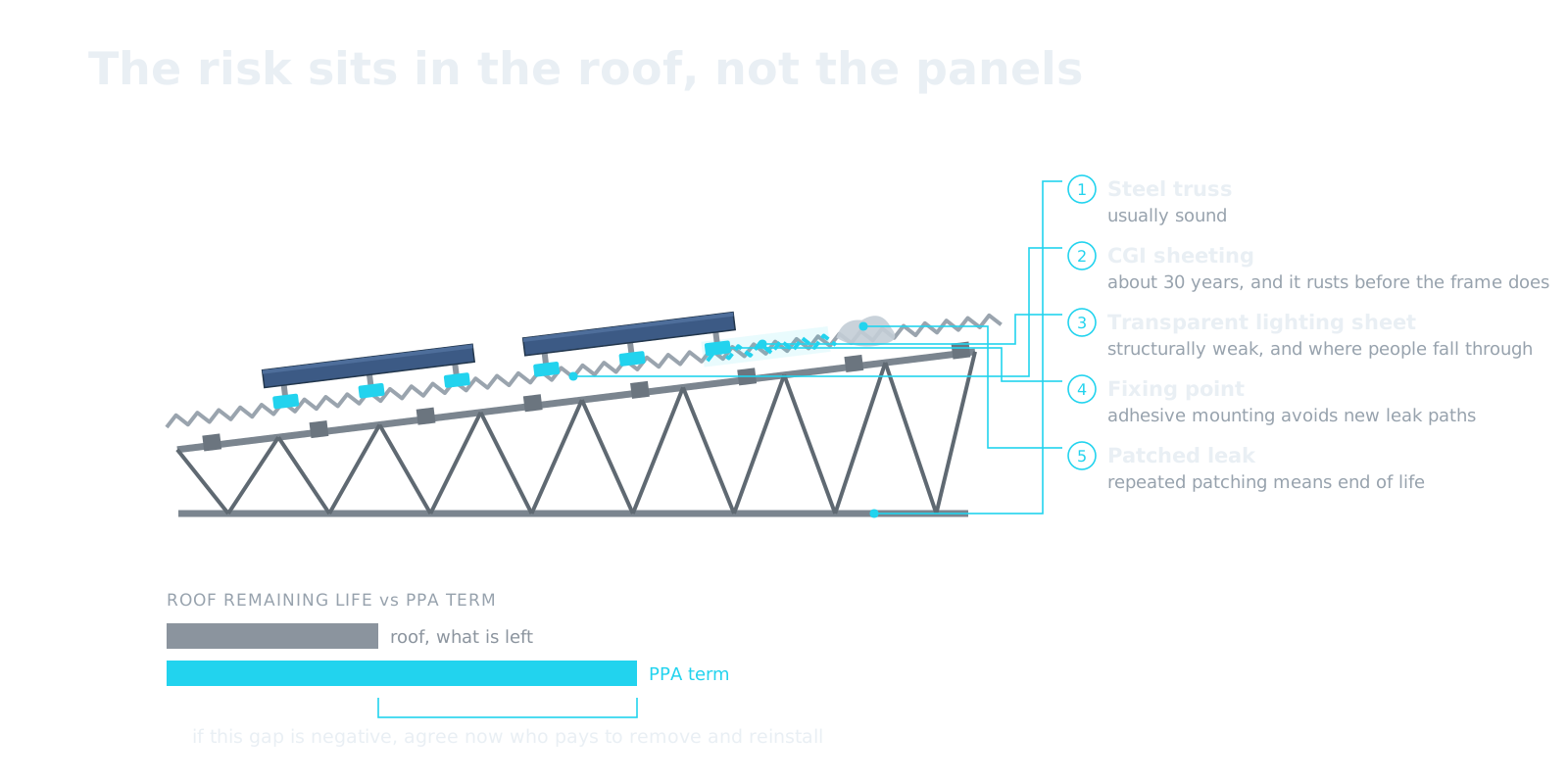
Putting a twenty year asset on a roof with eight years left creates a problem that surfaces in year nine, and the contract usually doesn’t say whose problem it is. In practice the repair is the building owner’s cost and the solar owner’s lost revenue.
Establish before anything is bolted down:
- Age and material of the sheeting, not just the frame. Steel trusses are generally sound. Sheets rust.
- Existing leaks, and whether they have been patched with sealant more than once. Repeated patching signals a roof near the end of its life.
- Transparent lighting sheets, structurally weak and the usual place people fall through.
- Load capacity, formally assessed. Some roofs need reinforcement before installation, and that is cheaper to discover at design stage than after mobilisation.
- Fixing method. Adhesive mounting avoids drilling and therefore avoids creating new leak paths, which matters on an older roof.
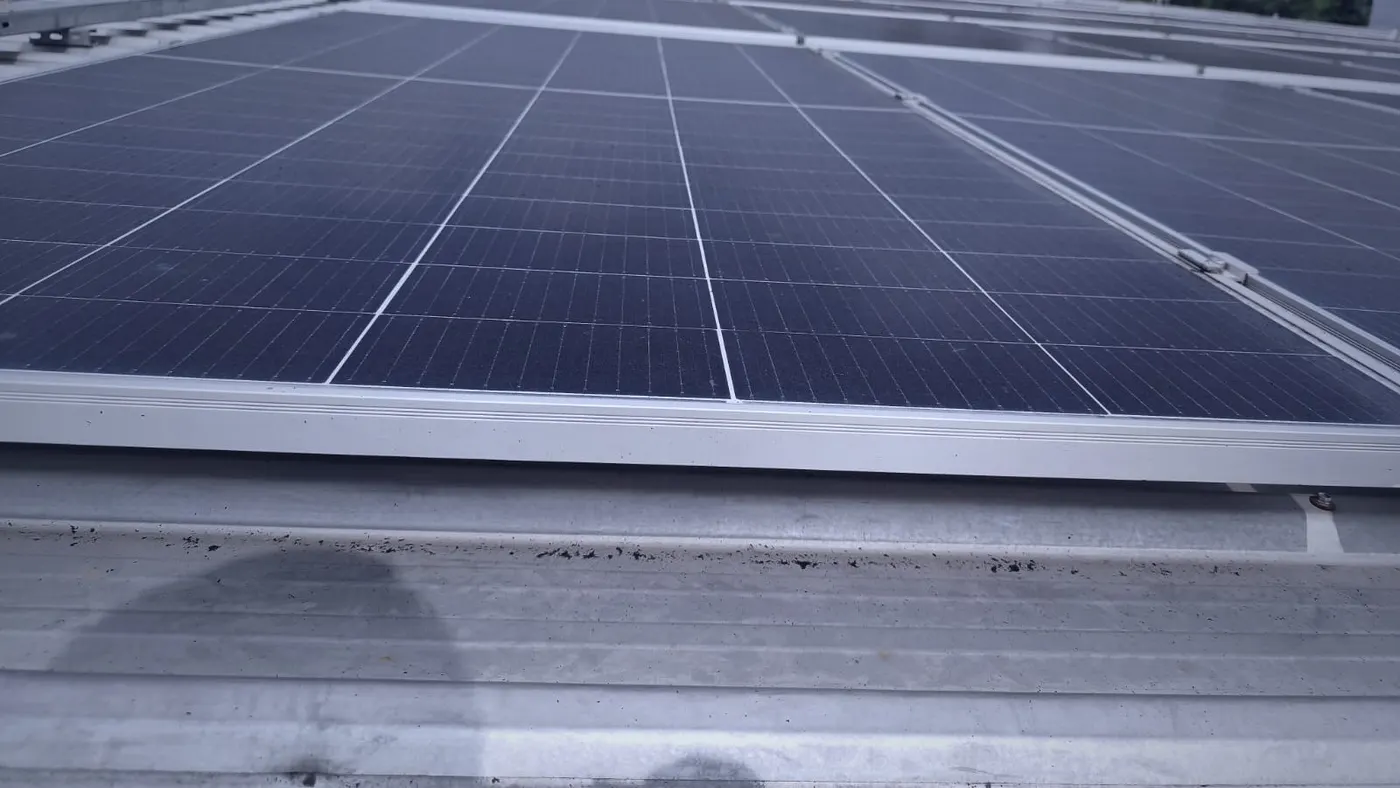
Write the roof condition into the contract, commission an independent structural survey for anything ageing, and agree in advance who pays to remove and reinstall the array if the roof needs replacing inside the term.
Soiling is a revenue line, not a maintenance detail
On a clean commercial roof, soiling costs perhaps 2 per cent. Adjacent to a chimney, a furnace or a rolling mill it costs a great deal more, and it behaves differently.
Industrial deposits are not dust. Smoke, ash and fine metallic particles combine with morning dew and bond to the glass. Water alone does not shift them. Sites like this need appropriate cleaning agents, non-abrasive tools and a higher frequency, and none of that happens unless somebody specified it at contract stage.
A subtler problem follows from rooftop geometry. Arrays are usually installed at low tilt, following the roof pitch, and low tilt lets dirt collect along the lower edge of each module and stay there. A crew wiping the middle of the panel misses exactly the strip where accumulation concentrates. That’s a training gap, not carelessness.
Three things separate a cleaning regime that works from one that exists on paper:
- A written water supply arrangement with the host facility. Cleaning needs water and someone has to provide it. Where that isn’t written down, cleaning stops the first time a pump fails or a shift supervisor objects, and nobody owns the problem.
- Proper tools issued to the crew, including an Allen key set so loose clamps get tightened during the same visit rather than reported and forgotten.
- Training that explains why, with performance data attached. A crew that has seen what a five per cent output drop looks like on a chart cleans differently.
Access, safety and the equipment room
This is where the gap between a good operator and a poor one is widest, and it’s the easiest thing for a prospective buyer to inspect.
On the roof, specify boundary rails along edges wherever the structure allows, since they offer protection that doesn’t depend on anyone remembering. Where rails aren’t feasible, a lifeline assembly plus harnesses is the minimum, and it works only if the crew clips on, which requires supervision rather than equipment. Add a permanent access ladder rather than a movable one, with handles both sides, restricted access signage at every entry point, and slip resistant walkways such as FRP grating on sloped roofs.
In the equipment room, the specification matters as much as the hardware:
- Site inverters somewhere dry, ventilated and at ground level, with floor drainage. Keep them clear of chillers, washdown areas, water tanks and anything else that can leak, and mount equipment on a raised plinth rather than directly on the floor.
- Specify an enclosure IP rating suited to the actual location, and don’t rely on a rooftop inverter’s own rating to survive monsoon plus soiling plus heat.
- Route cables in trays and conduit, and keep the room clear of stored tools and materials. An equipment room used as overflow storage becomes a fire risk and a fault-finding obstacle.
- Fit a fire extinguisher, check it for pressure and expiry on a schedule, and keep the access route to it clear.
- Fix an as-built single line diagram to the wall. It costs nothing and saves an unfamiliar technician an hour of circuit tracing during a fault.
Electrically, specify separate earthing for the DC side, the AC side and the lightning protection, each labelled, with measured earth resistance recorded and below 10 ohms in line with the lightning protection standard. Keep DC cabling in conduit and off hot roof sheeting, because cable resting on CGI through Jestha loses its insulation eventually. Reserve cable trenches for cables; sharing them with drainage is a fault waiting to happen. And size protective devices to the equipment they protect rather than fitting one rating throughout, which is easier for the installer and worse for you.
What belongs in the contract
India’s Solar Energy Corporation publishes a standard RESCO power purchase agreement, and it makes a useful free benchmark for anyone reviewing a Nepali contract. Measured against it, agreements written here commonly leave out the following.
| Clause | Why it matters |
|---|---|
| Force majeure | Nepal has earthquakes, floods and landslides. Its absence leaves both parties exposed |
| Change in law | Define what counts as material impact, with a renegotiation window and a termination right if unresolved |
| Roof access and safety | State who provides safe access, and to what standard |
| O&M standards and response times | “The contractor shall maintain” is not a standard. Specify cleaning frequency and fault response times |
| Water and power for maintenance | Who supplies it, and what follows if they don’t |
| Relocation | Define feasibility objectively, cap the cost, set a timeline |
| Handover at termination | Independent audit of plant condition, not a subjective assessment |
| Warranty assignment | Module and inverter warranties must follow the asset to whoever owns it |
| Performance guarantee | Rare in Nepali PPAs and worth asking for |
Under a RESCO arrangement the developer will usually want a bank guarantee from the offtaker against payment default, commonly somewhere between a tenth and a third of system cost, renewed periodically. That’s normal and negotiable.
Commissioning: what to demand at handover
You will never have more bargaining power than you have before final payment. Ask for all of it in writing:
- A testing and commissioning report covering each major component and the balance of system, with a defined performance monitoring period rather than a single day’s reading
- A correction punchlist, with critical items closed before energisation and non-critical items tracked to completion
- As-built drawings including the single line diagram, recording any deviation from the design
- Measured earth resistance values at each pit
- String and circuit labelling, and labelled earthing pits
- Warranty certificates with module serial numbers registered, so a claim years later is actually enforceable
- An operation and maintenance manual and a user troubleshooting guide
- Monitoring portal access in the owner’s name, not the installer’s
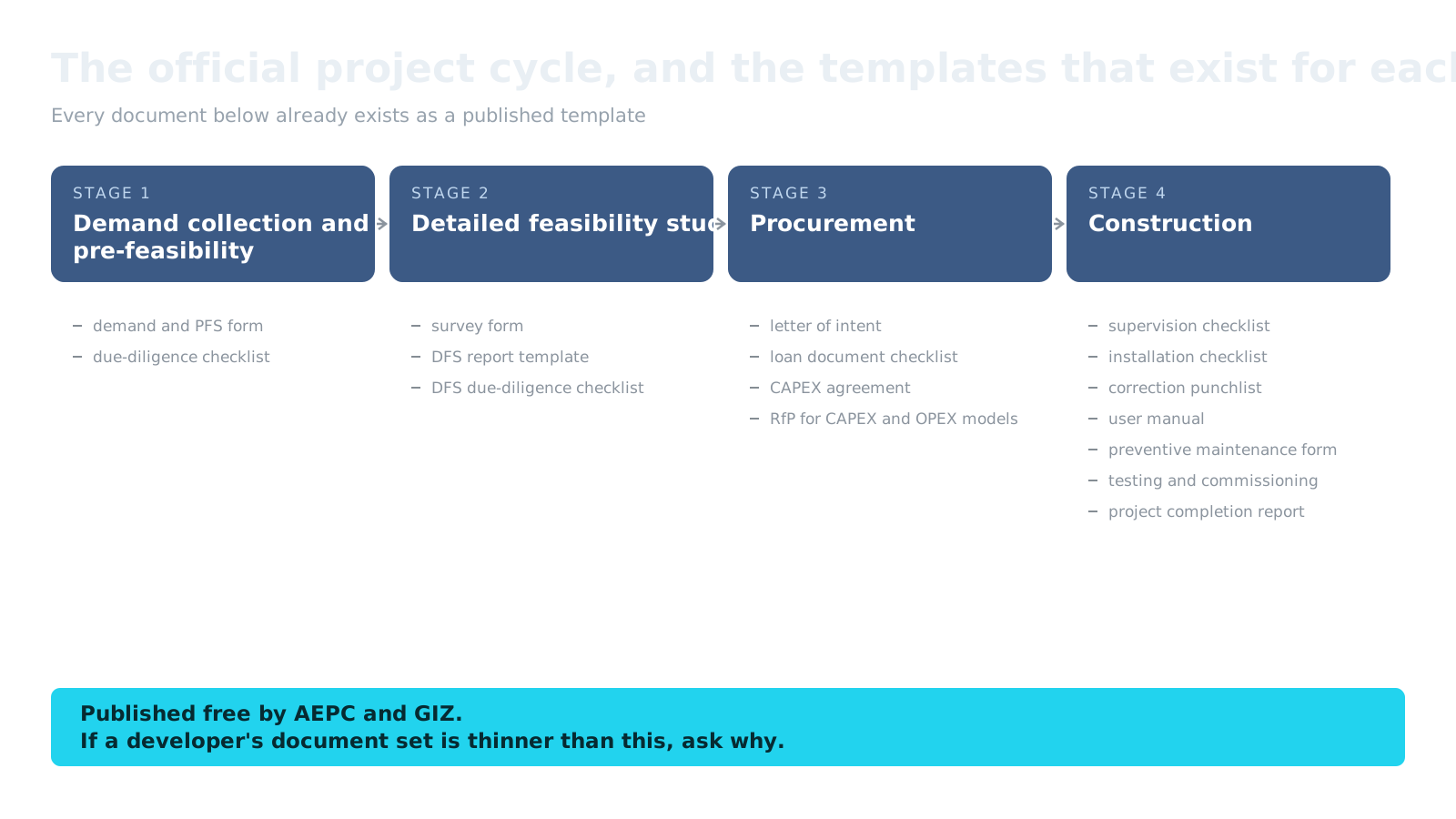
AEPC and GIZ publish templates for every one of those, so there is no reason to accept a thinner document set than the national guidance already provides.
Choosing who builds it
Nepal has over 150 active solar companies. AEPC maintains a published list of competent companies for solar PV applications, and the Solar Electric Manufacturers Association Nepal has well over a hundred members, but only around 30 to 35 firms are meaningfully active in grid-tied rooftop work.
Sector surveys point to two specific capability gaps worth probing. At engineer level, the weakness sits in feasibility studies, yield estimation and system sizing, and in proficiency with simulation tools. At technician level, it sits in grid-tied installation quality and in troubleshooting and O&M, largely because vocational curricula were built around solar home systems and have lagged the shift to grid-connected work.
Practical filters when comparing bidders: ask for a DFS from a comparable completed project and compare it against the AEPC template; ask which simulation tool they used and to see the loss assumptions; ask who performs O&M and whether they are employed or subcontracted; and ask for two references from systems that have been running more than two years, not two months.
Storage: the question that follows
Most C&I buyers arrive at battery storage within a year or two of commissioning, and for good reasons. A grid-tied plant disconnects during an outage. Utility disconnections and dry season curtailment cost real generation. And self-consumption economics improve when evening load can be served from stored daytime output rather than from the grid at retail.
Policy has begun to move: the budget for FY 2082/83 reduced customs duty on batteries and storage equipment to 1 per cent, which materially changes the arithmetic on a system that was previously taxed as an import luxury.
I’d treat storage as a second, separate decision rather than folding it into the initial rooftop business case. The rooftop system should stand on self-consumption alone. Storage then competes against diesel on its own merits, and in most industrial settings that is the comparison that actually decides it.
For related work, see my solar PV feasibility study, technical due diligence and techno economic modelling pages.
Frequently asked questions
How much does a rooftop solar system cost in Nepal?
Cost per kWp falls with size — roughly NPR 50,000 to 60,000 per kWp around 100 kWp, and roughly NPR 35,000 to 45,000 above 500 kWp, which tracks below the NPR 60,000 to 70,000 per kW seen on recent utility-scale contracts, as you’d expect since rooftop avoids land and transmission costs. Treat the table as a starting shape rather than a quote — check the free AEPC and GIZ rooftop planning tool and get real bids before pricing anything.
Does net metering still exist in Nepal?
The term is used loosely. One for one net metering was discontinued in July 2022 and replaced by net billing, where export is credited at a fixed NPR 5.94 per unit rather than offset against your retail tariff. A purchase mechanism was later restored and NEA still refers to net metering. Ask any supplier what rate your export will be credited at.
How long does grid interconnection take?
Longer than the installation, and it runs on its own timetable through the distribution centre, meter procurement and RETS certification. Until it completes, surplus generation is lost rather than credited, so build the lag into the financial model and start the application in parallel with procurement.
What specific yield should I expect?
Between 1,100 and 1,400 kWh per kWp per year for a well built system, with a performance ratio of 85 to 90 per cent once running properly. Treat simulations above 1,300 with caution and use the more conservative of your PVsyst and SolarGIS results for financing.
Is rooftop solar worth it for a house in Nepal?
Usually not yet on economics alone. Household load is low during generation hours, so most output exports at roughly half the retail rate. The case improves with high daytime load, an electric vehicle charged at home, or a change in the export rate.
Can a grid-tied system run during a power cut?
No. Anti-islanding protection disconnects the inverter when the grid fails, to protect anyone working on the line. Backup requires generator synchronisation or battery storage, both separate decisions with separate economics.
Where can I get the official templates and guidelines?
AEPC and GIZ publish a full implementation package for grid-connected solar covering pre-feasibility, detailed feasibility, procurement and construction, plus a planning guideline with an Excel financial tool and a rooftop sizing tool. All of it is free on the AEPC website under Solar Grid-Connected Systems. For design optimisation specifically, see Malla and Gautam’s ICIMOD handbook on on-grid rooftop solar PV design optimization (2023).
Where to go next
Before you talk to a supplier, get three things: twelve months of electricity bills with the time of day split, an honest measure of usable shade-free roof area, and the age of your roof sheeting. Those three determine the system size, the returns and the risk, and you can establish all three yourself in a week.