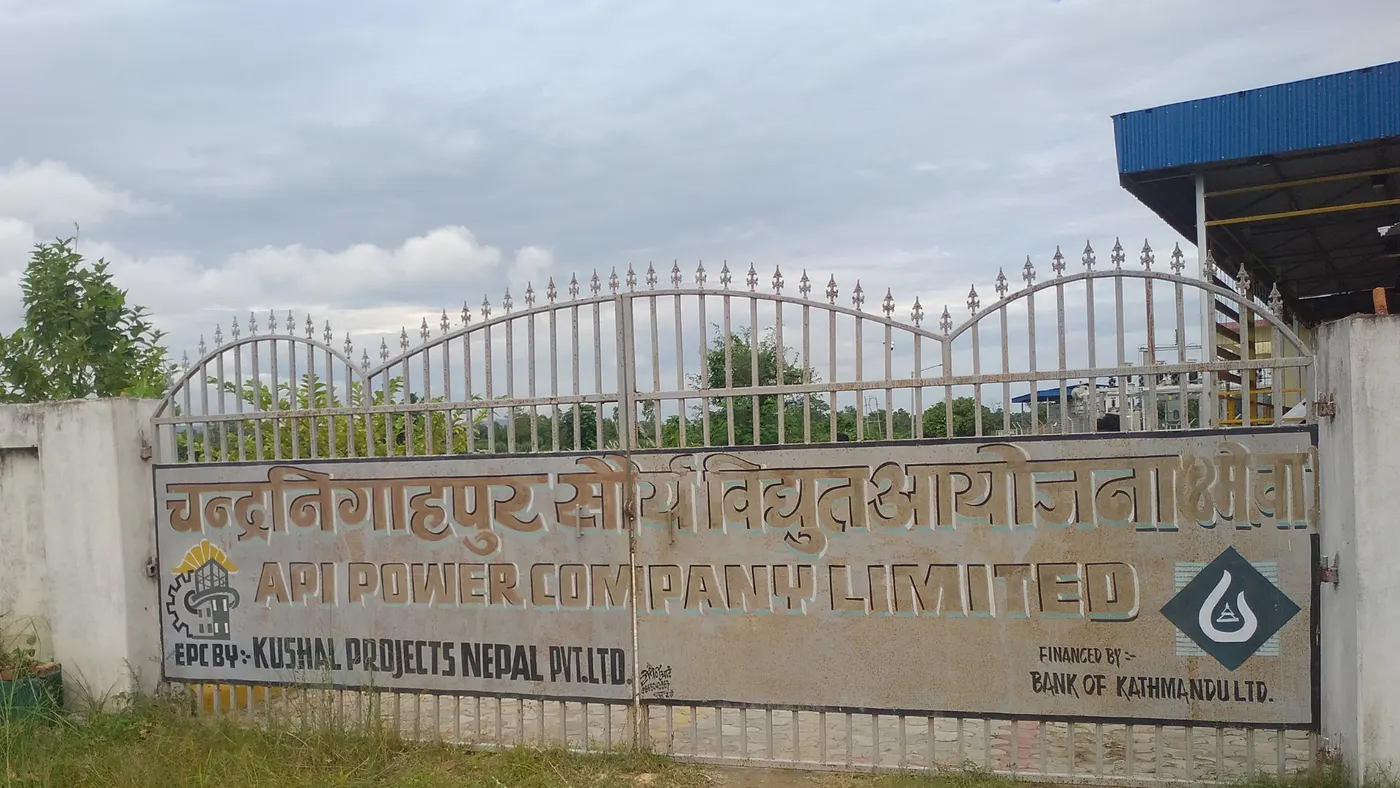
The Chandranigapur 4 MW Solar PV Project is a significant step towards sustainable energy in Rautahat, Nepal. It covers an area of 20 acres (around 6.5 Bigha) and is located at coordinates Longitude 85022’16” E to 85022’12” E and Latitude 27006’30” N to 27006’08” N, in the landscapes of Chandranigahapur VDCs. The project is designed to take advantage of the abundant sunlight in Province 2 and provide a reliable and renewable energy source.
It began operating on August 22nd, 2021, and the energy it produces is sold to the Nepal Electricity Authority (NEA) at a cost of around Rs 7 per unit. The current scenario of solar pricing and uplifting policies in Nepal is encouraging, making projects like the Chandranigapur project crucial in leading the nation towards a greener and more sustainable future. This kind of independent write-up is close to what a solar PV feasibility study or technical due diligence review formally documents for a project.
Technical Specification
The solar power plant has a high-performing facility that produces 4.96 MW in DC and 4 MW in AC. It is equipped with modern monocrystalline half-cut panels, each with an impressive 450-watt rating, to ensure efficient energy capture. The plant is seamlessly connected to the grid and uses a 5MVa inverter for the DC to AC conversion, allowing integration with the Nepal Electricity Authority (NEA) grid via a 3 km nearest transmission line. The breakeven point is estimated at 7-8 years, emphasizing the long-term sustainability of this project.
Operational Insights
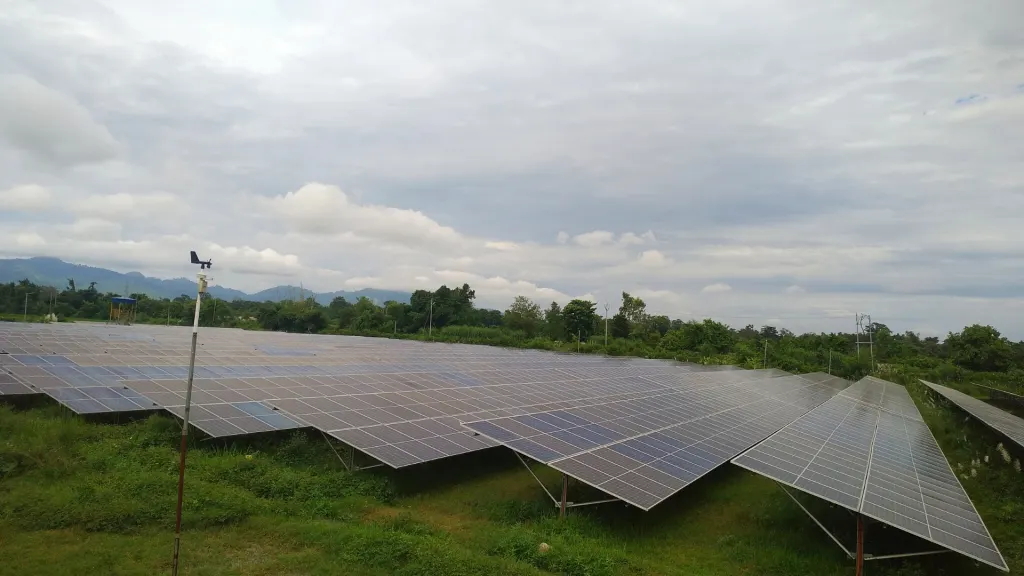
The solar plant produces approximately 17-18 kWh of energy per day by utilizing sunlight effectively. To achieve maximum efficiency, the panels are tilted at a 15-degree angle. The entire setup covers an area of 6.5 bighas, which is equivalent to about 2.6 hectares and is well-organized. A weather station is installed to keep track of weather conditions, which assists the plant in generating energy efficiently. Similarly, the plant is facilitated with 3 lightning protection arresters. Additionally, cable issues, electrical parts, transformers, and any heating problems with the inverters are regularly monitored and fixed.
The Solar PV Project does not utilize a solar tracking system. Instead, the solar panels are mounted at an optimal height using a mounting system to ensure stability, promote air circulation, and prevent wind from affecting the panels. This innovative design also helps in cooling, which prevents efficiency loss due to overheating, while simultaneously avoiding shadowing issues.
The Api Power Company Limited Chandranigapur 4 MW Solar PV Project runs on an on-grid system, supplying the energy it generates directly to the Nepal Electricity Authority’s grid. Notably, the project does not use any storage systems, focusing on real-time energy production and contribution to the local power grid.
Installation Journey
The Chandranigapur 4 MW Solar PV Project was set up within just 6 months, showcasing a swift and efficient setup. The panel configuration is designed for optimum efficiency, featuring 17 lines, each board accommodating 56 monocrystalline panels with a half-cut design. The total of 11,032 panels is organized into 28 series, each rated at 45V and 10A. With an average of 4.5 peak sun hours, the plant ensures consistent energy production.
Frequently asked
Does the project use a solar tracking system? No. The panels are mounted at a fixed 15-degree tilt on a mounting system designed for stability and air circulation, rather than tracking the sun.
Does the project include battery storage? No. It runs on-grid, supplying power it generates directly to the Nepal Electricity Authority’s grid in real time, without a storage system.
What is the estimated payback period? 7-8 years, based on the plant’s 4 MW AC output and its power sale agreement with NEA at around Rs 7 per unit.